
Mid-Century Roof Replacement in Dublin, for Homes Still on Their Original Roof
The suburban semis built between the 1930s and the 1970s are coming to the end of their first roof. An honest look at whether yours is done, from a family-run Dublin roofer since 1989.
The Houses That Moved Dublin Out of the City
Mid-century roof replacement in Dublin is really about one generation of housing. Through the middle of the last century the city pushed outward, and estate after estate went up to move young married couples out of the inner city and into a house with a garden. Whitehall, Donnycarney, Killester, Artane, Santry, Beaumont and Elm Mount all filled in across those decades, along with Crumlin, Drimnagh and Walkinstown on the other side of the city.
That history matters for a practical reason. Those houses went up together, in a short window, with the same materials and the same roofs. Which means their roofs are reaching the end of their lives together too, and it is why one road can see several re-roofs inside a few years while the road behind it has had none. If you are in one of those houses, the question is rarely whether the roof will need doing. It is whether it needs doing now.
Two Roofs, Depending on When Your Road Was Built
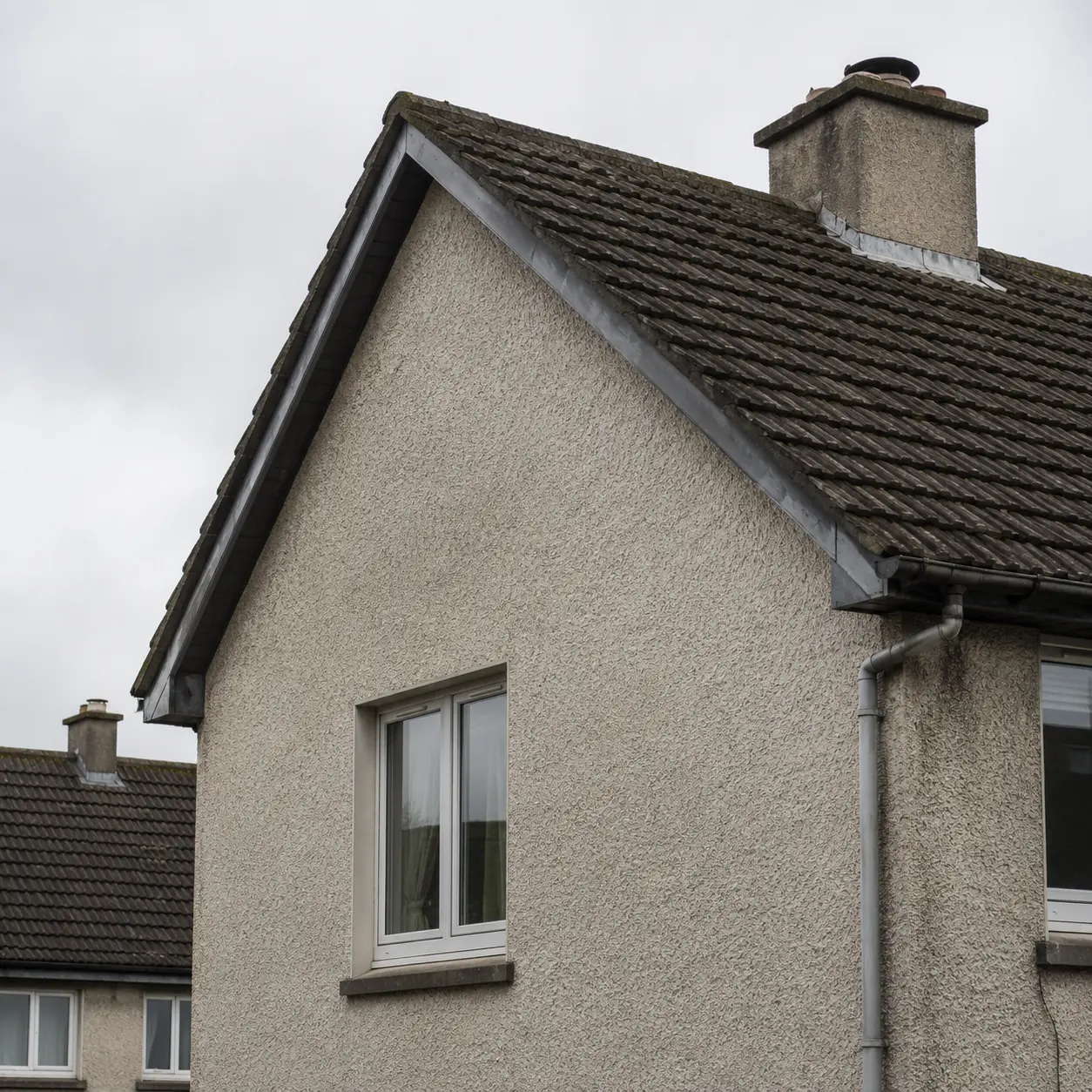
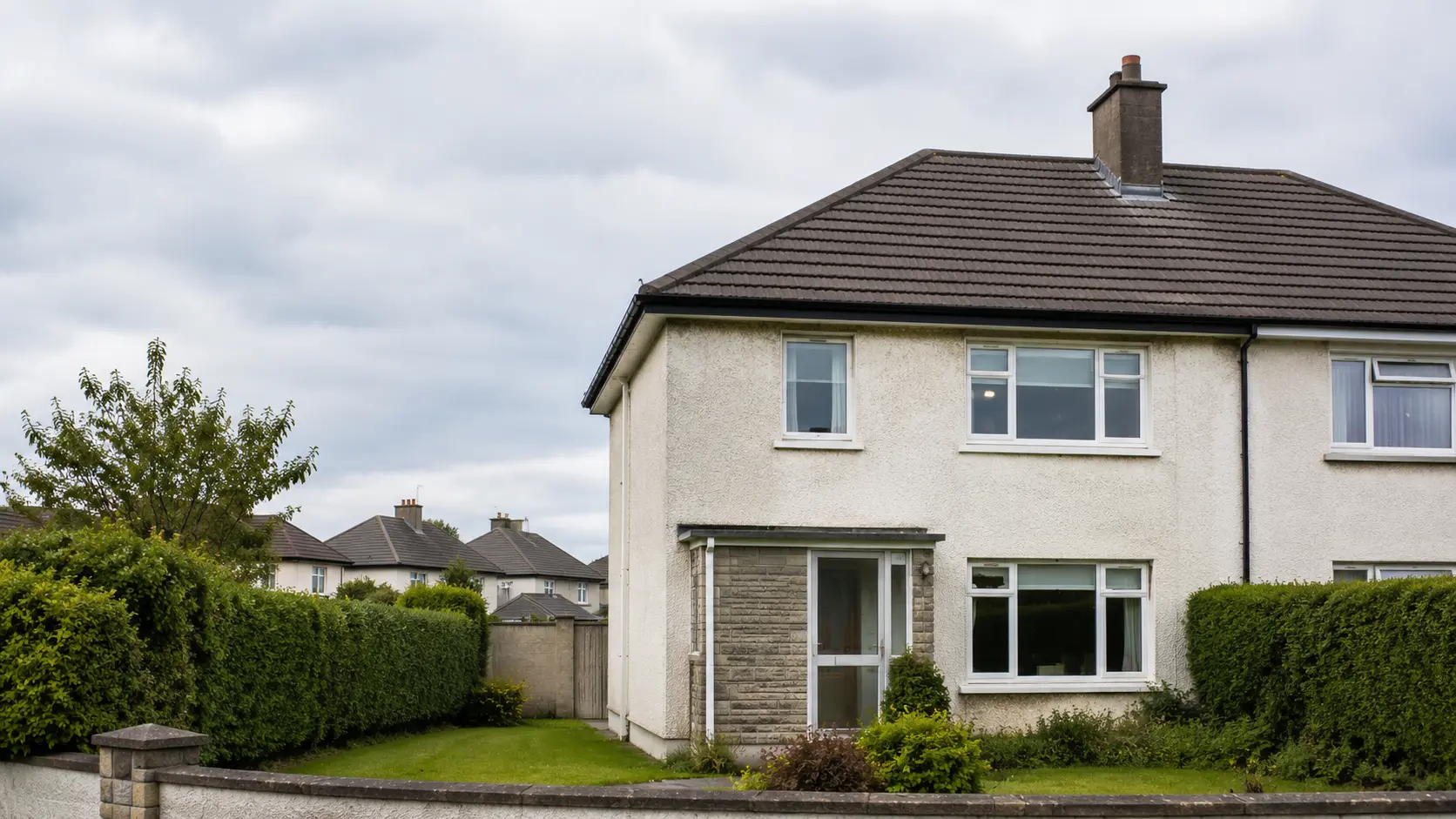
The housing of this period is not all the same, and the difference shows on the roof. The earlier stock, built through the 1930s and into the 1950s, tends to carry warmer clay and red tile on a hipped roof, on streets of pebbledash terraces and semis laid out in long uniform runs. The later estates of the 1950s and 1960s moved to the machine-made concrete interlocking tile most people picture, greyer and heavier, on the same hipped shape.
Both were good roofs and both have done their job for a very long time. They age differently though, and knowing which one is over your head changes what to look for and what a replacement should cost, which is why we split them out into the 1930s to 1950s clay tile houses and the 1960s to 1970s concrete tile estates. That is the honest starting point for any conversation about a roof of this age, and it is why we look before we price rather than quoting a number down the phone.

Signs an Original Roof Has Reached the End
Roofs of this age tend to go the same way. One of these on its own is worth watching, and several together usually means the roof is telling you something, which our guide to when a 1950s roof is actually due works through in detail.
Tiles Gone Porous and Rough
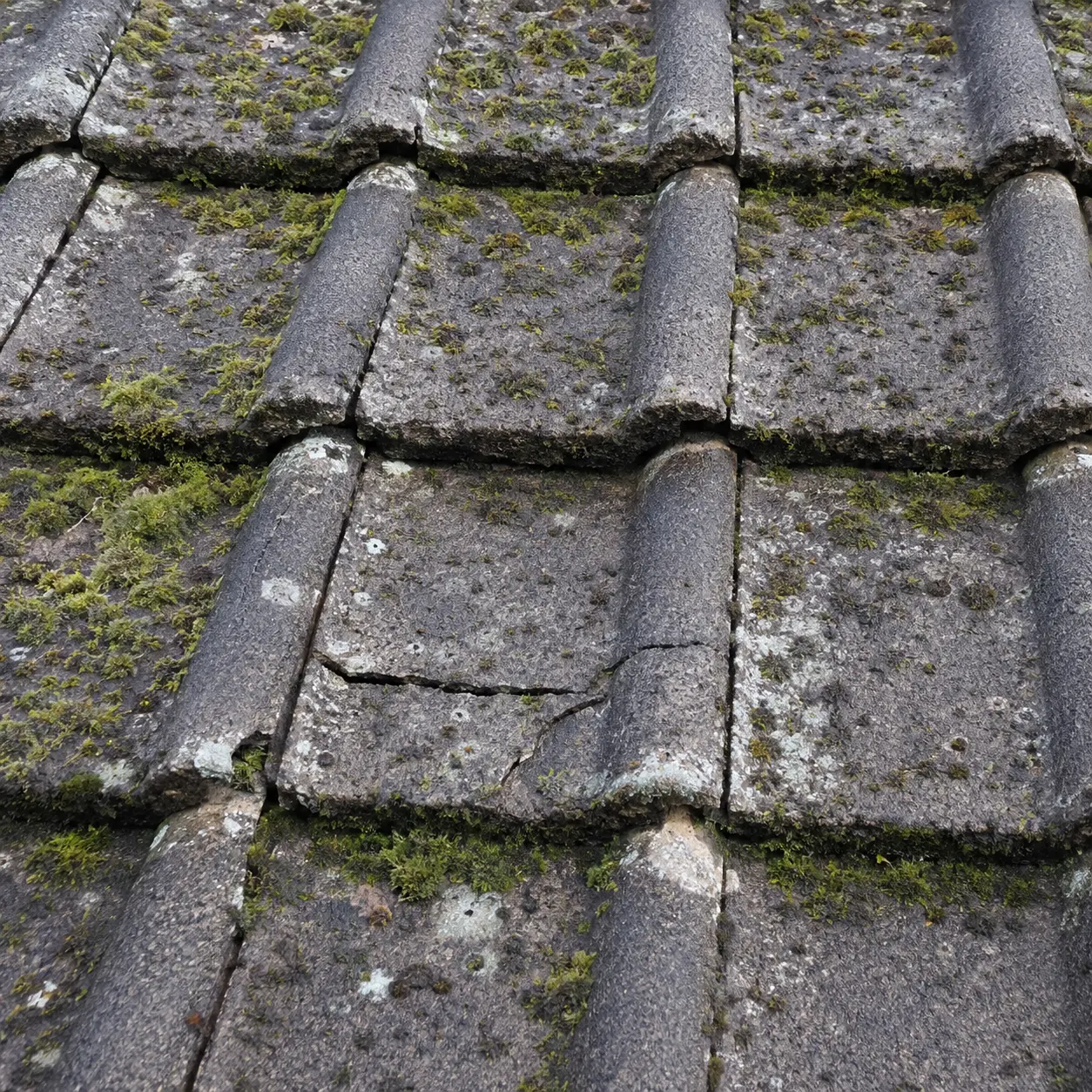
Concrete tile does not last forever. After decades it loses its surface, soaks up water like a sponge and goes rough to the touch. Once it holds water it cracks in the first hard frost, and a tile that has started to break down cannot be sealed or painted back to life.
Cracked and Broken Tiles After a Frost
A few cracked tiles each winter is the clearest sign a roof is near the end. The water sits in the tile, freezes, and splits it from the inside. Replacing them one by one works for a while, until the year the neighbouring tiles start going too.
Torn Felt Visible in the Attic
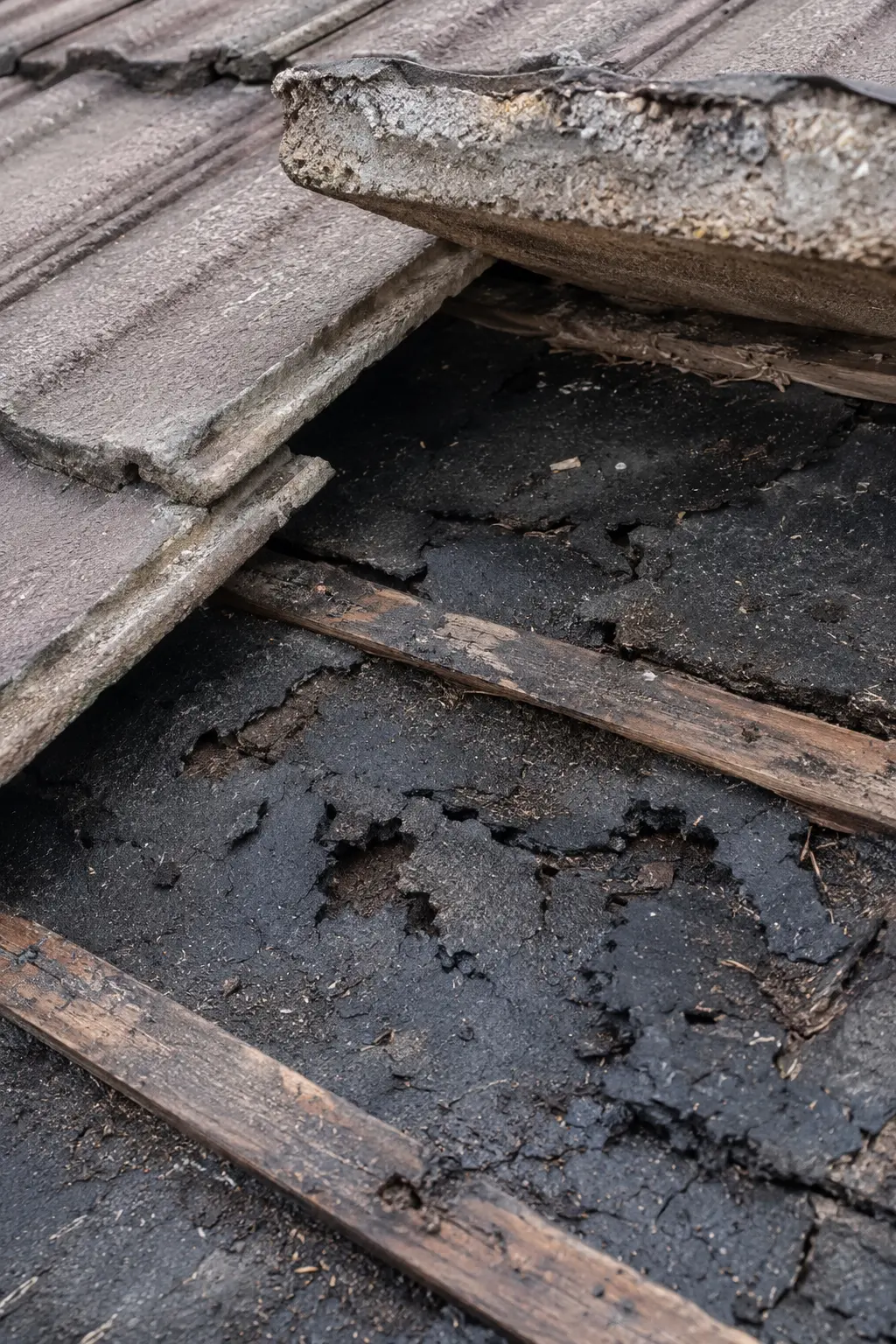
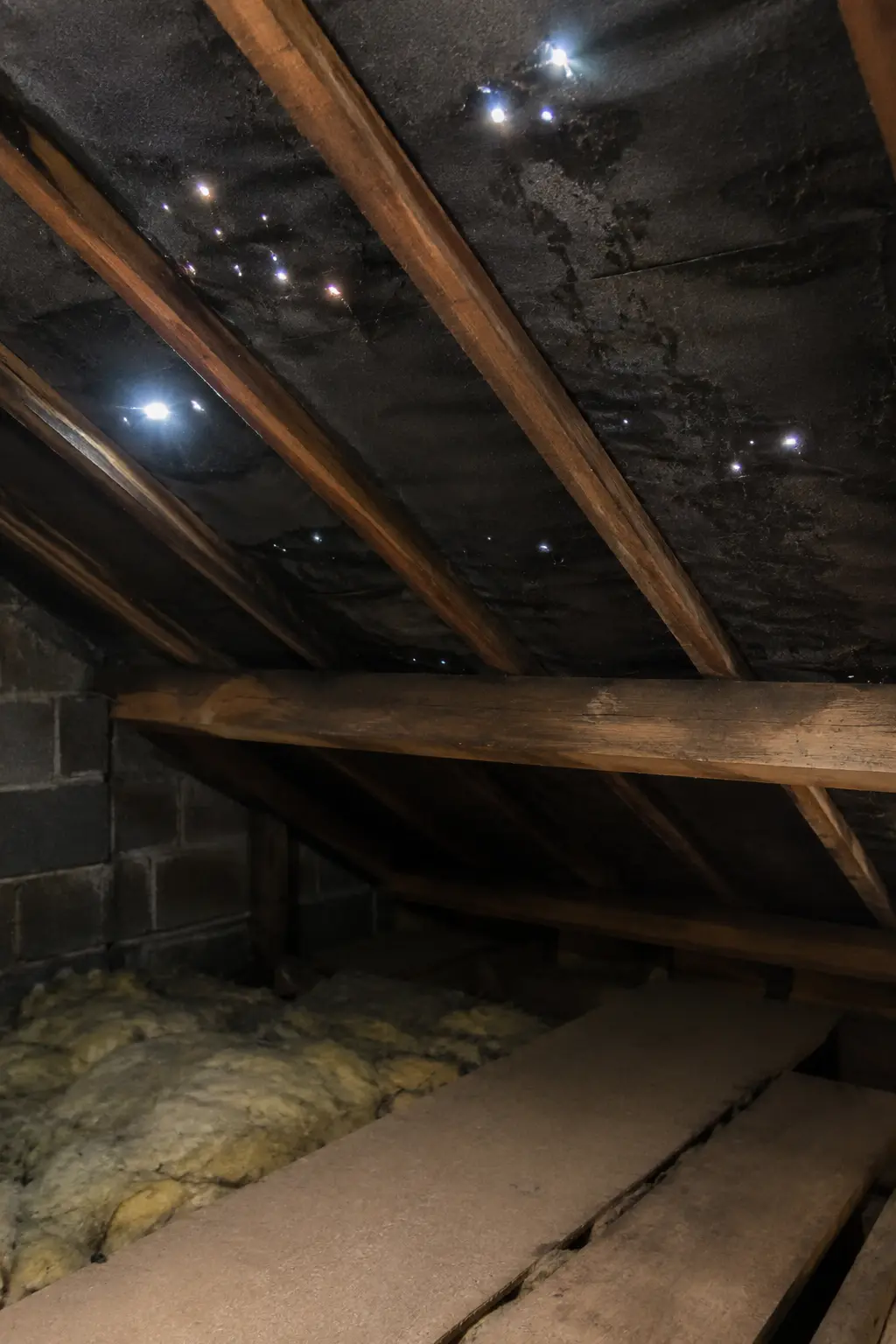
The bitumen felt under the tiles was the second line of defence, and on a roof this age it has usually gone black, brittle and torn. Look up in the attic on a bright day, and if you can see daylight or hanging strips of felt, the roof is relying on the tiles alone.
Ridge Mortar Crumbling Away
The cement bedding holding the ridge and verge tiles was never meant to last a lifetime. It cracks, goes sandy and falls out in lumps, leaving the ridge loose on top of the roof and the verge open to the wind along the gable.
Heavy Moss and Blocked Gutters
Moss takes hold far more easily on a worn, porous tile than on a sound one, so thick growth is usually a symptom rather than the problem. It holds damp against the tile, breaks off in lumps and ends up blocking the gutters below.
A Dip or Wave in the Roofline
Stand across the road and look along the ridge. A dip or a wave where the neighbours are straight points to battens or rafters that have taken years of small leaks. It is worth looking at early, because sound timber is far cheaper to keep than to replace.
What a Full Re-Roof Actually Involves
A re-roof is a bigger job than a repair and it should be explained properly before you commit to it, so here is the whole thing, in the order it happens.
We Look at the Whole Roof, Not the Leak
A free inspection starts outside and finishes in the attic, because on a roof of this age the tile is only half the story. We look at the state of the tiles, the ridge and verge bedding, the flashings and the gutters, then go up into the attic to see the felt, the battens and the timbers from underneath. That is where a roof tells you honestly whether it has years left or is genuinely finished, and it is why we will tell some people to wait.
Strip, and Check the Timbers Underneath
A re-roof begins by stripping the old tiles and felt right back to the rafters, with the old material going straight into a skip rather than sitting in your garden for a week. With the roof open we can finally see the timbers properly, and any battens or rafter ends that have taken years of small leaks get replaced then, while everything is accessible and before the new roof goes on top.
Breathable Membrane and New Battens
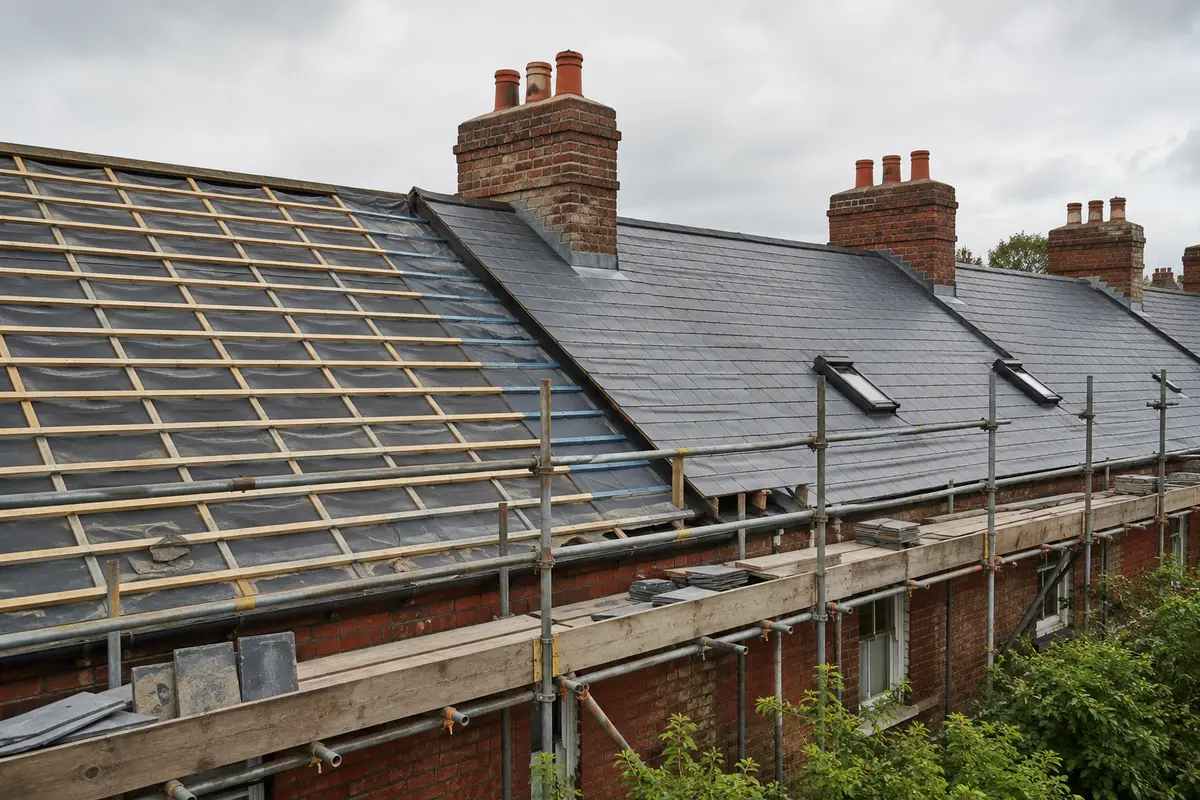
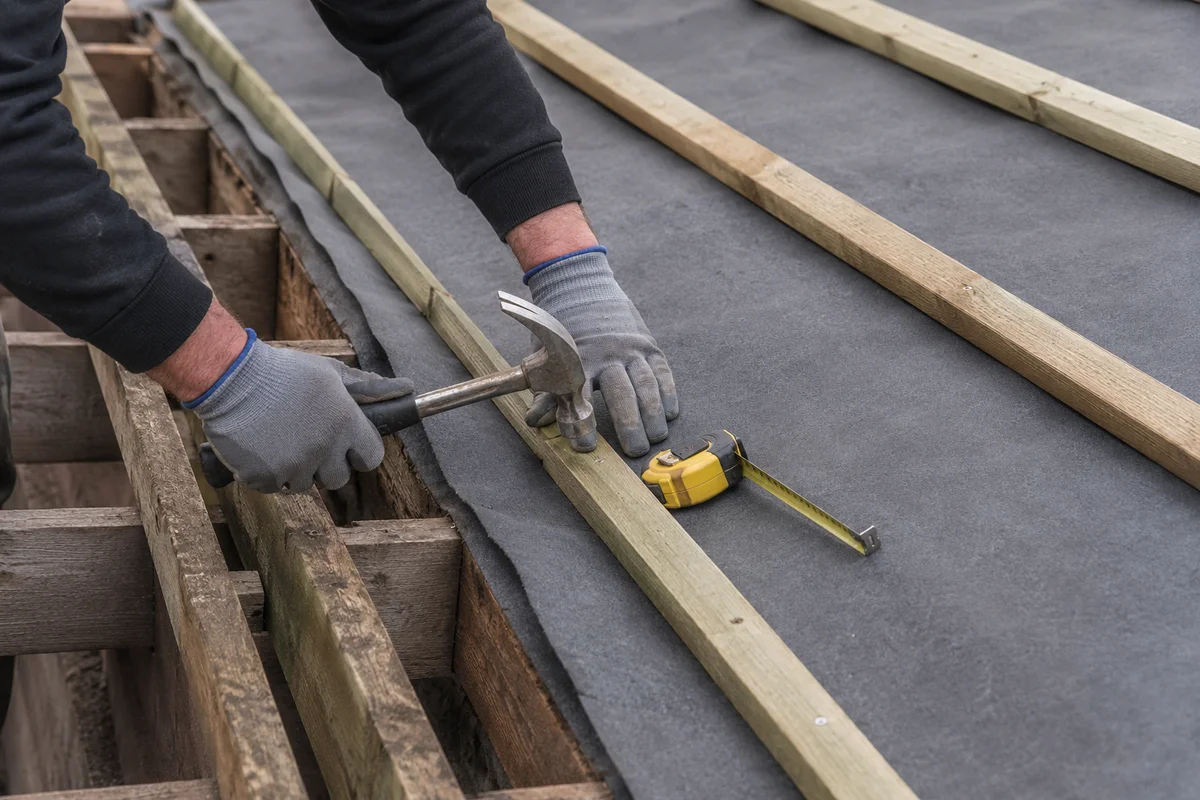
The old bitumen felt is replaced with a modern breathable membrane, which keeps weather out while letting moisture from inside the house escape rather than sitting in the roof space. New treated battens go on over it at the correct gauge for the tile. This is the part nobody ever sees once the job is done, and it is the part that decides whether the roof stays dry for the next few decades.
New Tiles, Dry Ridge and a Clean Finish
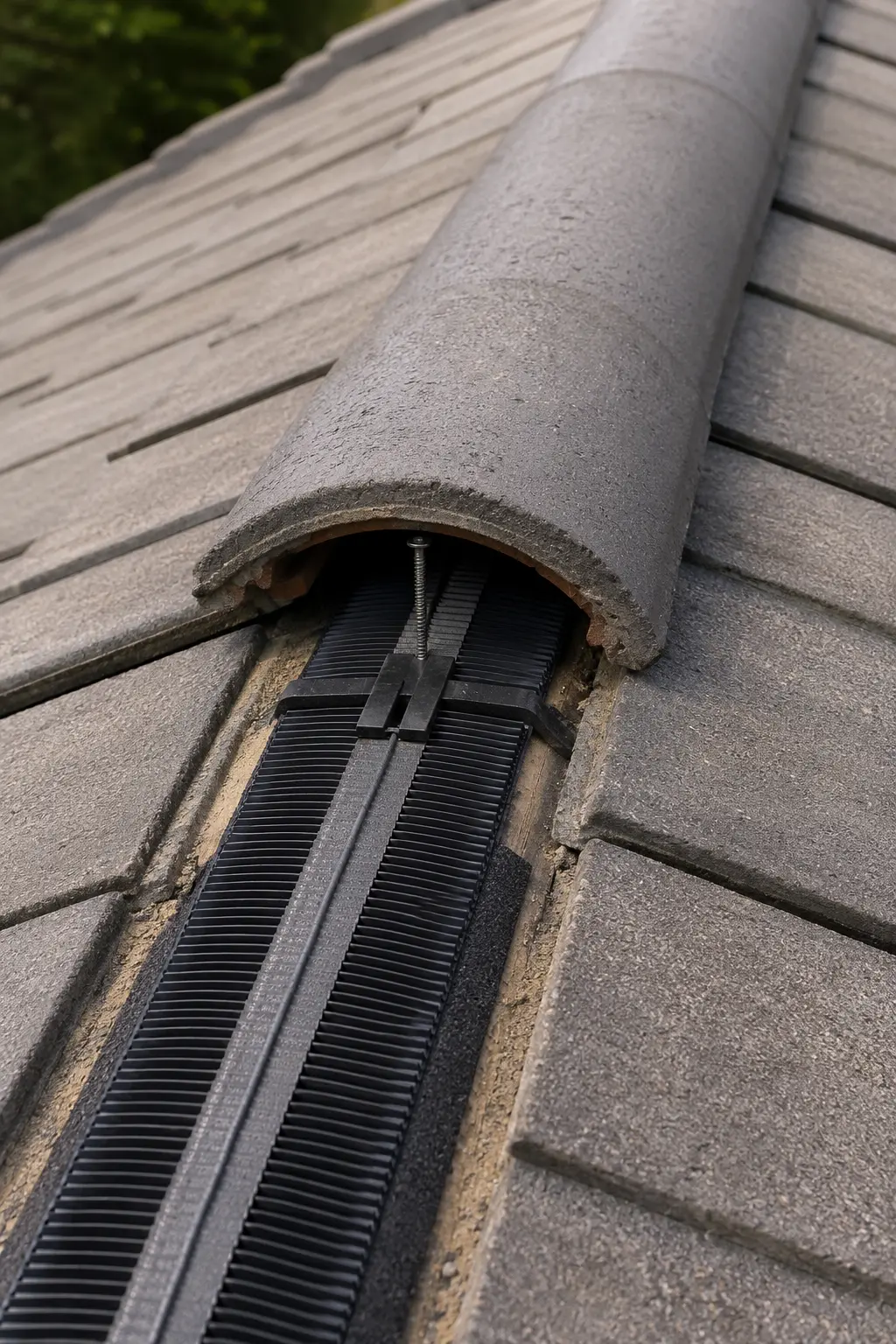
The new tiles go on, and the ridge and verge are finished with mortar-free dry systems that clip and screw into place rather than being bedded in cement. That removes the part of the old roof most likely to crack and need repointing again in ten years, and it ventilates the ridge at the same time. The site is cleared, the gutters are cleaned out, and the work is covered by our guarantee.
The Attic Conversion Is Often the Older Problem
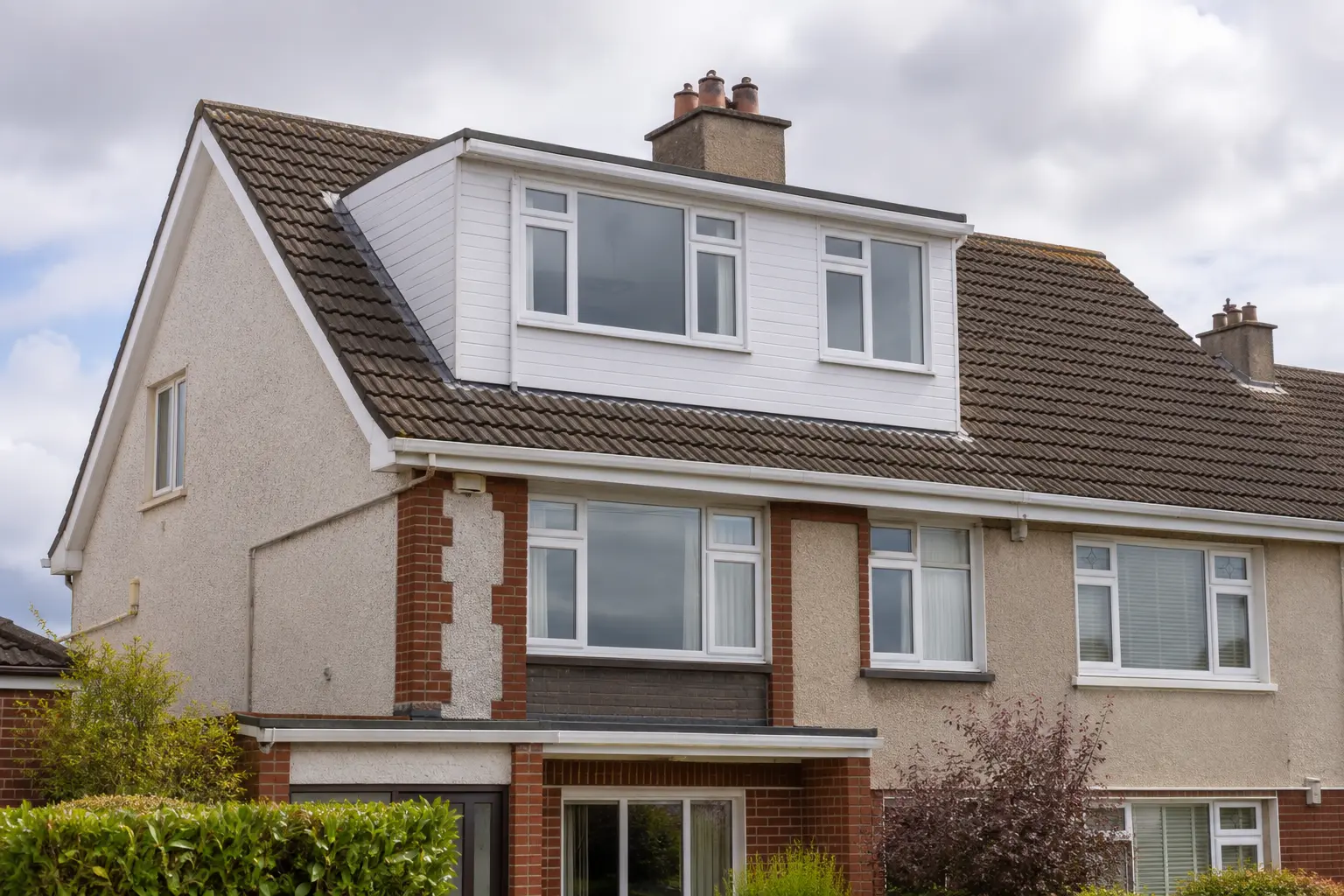
There is a second layer to a lot of these houses. The families who moved out in the 1950s extended up into the attic through the 1970s and 80s as the children grew, so a great many of these homes carry a dormer added decades after the original roof went on. Those conversions are now forty to fifty years old themselves.
They bring their own faults, and they are usually the first thing to leak. The junction where the dormer meets the original roof, the flashings around it, the cheeks at either side and the small flat roof on top of it are all details that were done to the standards of the day and have weathered ever since. Very often the call we get is about a damp patch in a converted bedroom rather than the main roof at all, and that is a smaller and more contained job than a full replacement.
Where This Housing Is, Across Dublin
The belt running out along Collins Avenue and the Swords Road is the heart of it, taking in Donnycarney, Whitehall, Killester, Artane, Santry, Beaumont and Elm Mount, and we cover all of it as part of north Dublin city. The same era built Crumlin, Drimnagh and Walkinstown on the south city side, and the later estates out through south county Dublin and west Dublin. Wherever the house is, the roof was built to the same recipe and ages the same way.
If your house is older than this and carries natural slate rather than tile, that is a different craft and a different page, covered under our period roof restoration work. You can see every part of the city we cover on the Dublin areas page.
What It Costs, and How We Price It
The price of a re-roof follows the size and shape of the roof, the tile you choose and the access, which is why an honest figure needs a look rather than a guess. A straightforward hipped semi is a very different job to a house with a dormer conversion, two valleys and a chimney. We measure it, we tell you what we found in the attic, and you get a written price that sets out what is included before anything is ordered.
For guide figures while you are thinking about it, our roofing costs in Dublin page sets out typical ranges, and the new roof cost guide explains what actually moves the number. On the detail, there are guides on what goes wrong with concrete tile, felt versus a breathable membrane and dry ridge versus the old cement ridge. If you would rather start with a quick read on your own roof, the free roof health check takes a few minutes from the garden. Where the roof turns out to be sound, we do roof repairs instead, and where it is genuinely finished it is a full re-roof.
Whichever it turns out to be, you get the same thing from us first, a free inspection and a straight answer. When you are ready, honest mid-century roof replacement in Dublin starts with someone actually looking at your roof.
Questions About Replacing an Older Suburban Roof
How long should the original roof on a 1950s house last?
Do I need a full re-roof, or will repairs do?
Can you replace the tiles but keep everything underneath?
Will a new roof look out of place on the road?
How long does a re-roof take and how disruptive is it?
What Dublin Homeowners and Businesses Say
We have never asked anyone for a review, and we have never taken one down. Our perfect 5.0 rating from 41 Google reviews is simply what people wrote once the job was finished, tidied and paid for.
“They completed a full roof inspection and gave honest advice with no pressure. Very refreshing to deal with such a genuine company”
Verified Google review
“They gave me a clear quote, no hidden extras, and the work was done exactly as promised. Roof looks brand new. This company knows what they’re doing.”
Verified Google review
“From the first phone call to the finished job, The Roofing Academy were a pleasure to deal with. Roofing and guttering work completed to a very high standard. Would definitely use them again.”
Verified Google review
Still on the Original Roof?
A free inspection, a look in the attic, and an honest answer on whether your roof needs replacing now or has years left in it. No pressure either way, from a family-run Dublin roofer since 1989.
- Free inspection and a written quote
- 20-year guarantee on our work
- Family-run since 1989, fully insured
Rated 5.0 on Google from 41 reviews