
1960s to 1970s Roof Replacement in Dublin's Concrete Tile Estates
The later estates, built bigger and roofed in machine-made concrete tile, with an attic conversion added on top of a great many of them. Both now due, from a family-run roofer since 1989.
Estates Built Bigger, and Built Alike
1960s to 1970s roof replacement in Dublin covers the later suburban push, when the estates got larger and the housing more uniform. Beaumont, Santry and Elm Mount belong to this stretch on the northside, with the newer end of Artane, and the same years filled in the bigger estates further out. Integral garages, gable fronts and hipped roofs in grey machine-made concrete interlocking tile rather than the warm clay of the earlier streets.
Being later, these roofs are a decade or two behind the clay-tile houses on the same curve, which is exactly why they are reaching us now. It also means whole roads move together, because an estate roofed in one go wears at one rate. This is the younger half of our mid-century roof replacement work.
How a Concrete Tile Roof Reaches the End
Concrete tile goes a very particular way, and it goes everywhere at once rather than in patches. Here is the sequence, and where the dormer fits into it.
Concrete Tile That Has Gone Porous Right Across
Mass-produced concrete tile does not fail in one spot, it fails everywhere at once, because every tile on the roof is the same age and the same mix. The surface wears away, the aggregate underneath starts showing through, and the tile begins drinking water instead of shedding it. Run a hand over one and it feels like coarse sandpaper rather than a smooth face, and at that point the whole roof is on the same clock.
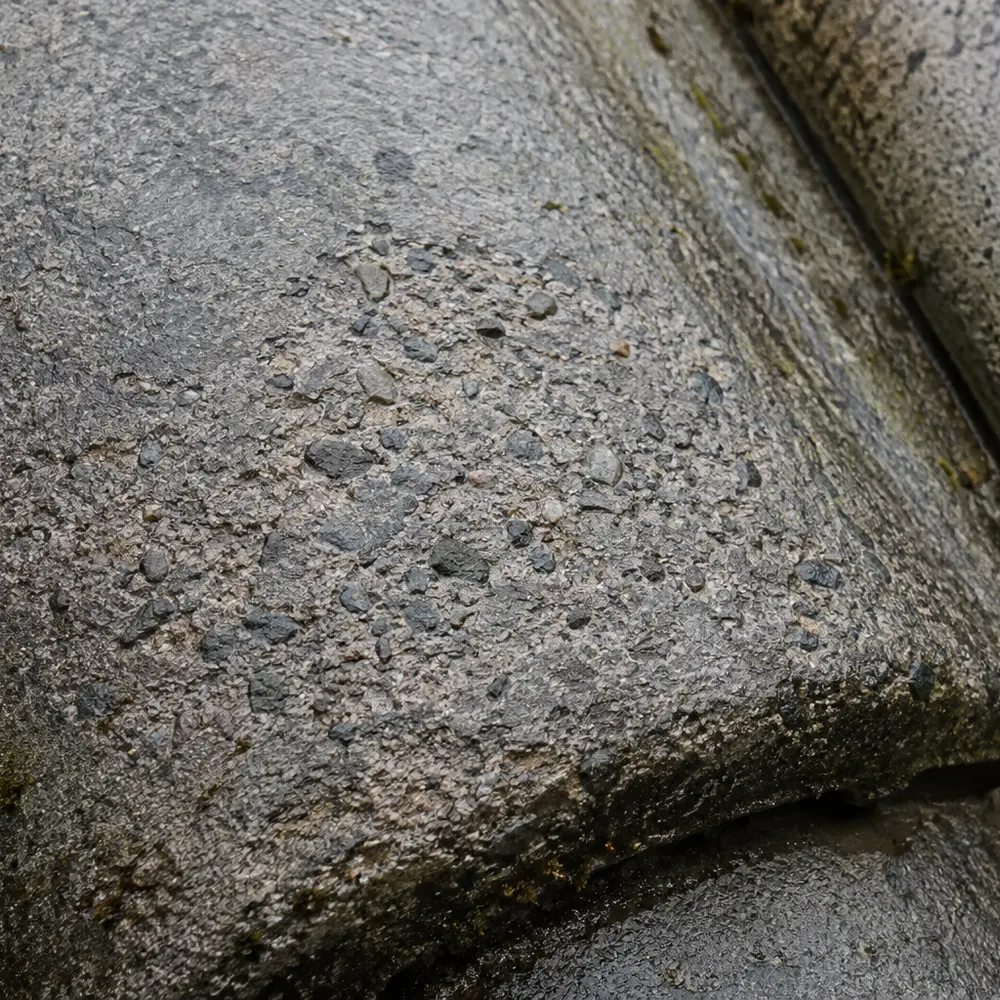
Frost Splitting Tiles Every Winter
Once a tile is holding water, the first hard frost does the rest. The water freezes inside it and splits the tile from within, which is why these roofs seem to lose a few more every winter rather than failing all at once. Replacing the broken ones works while it is a handful a year, and stops working the year you realise the sound tiles are running out.
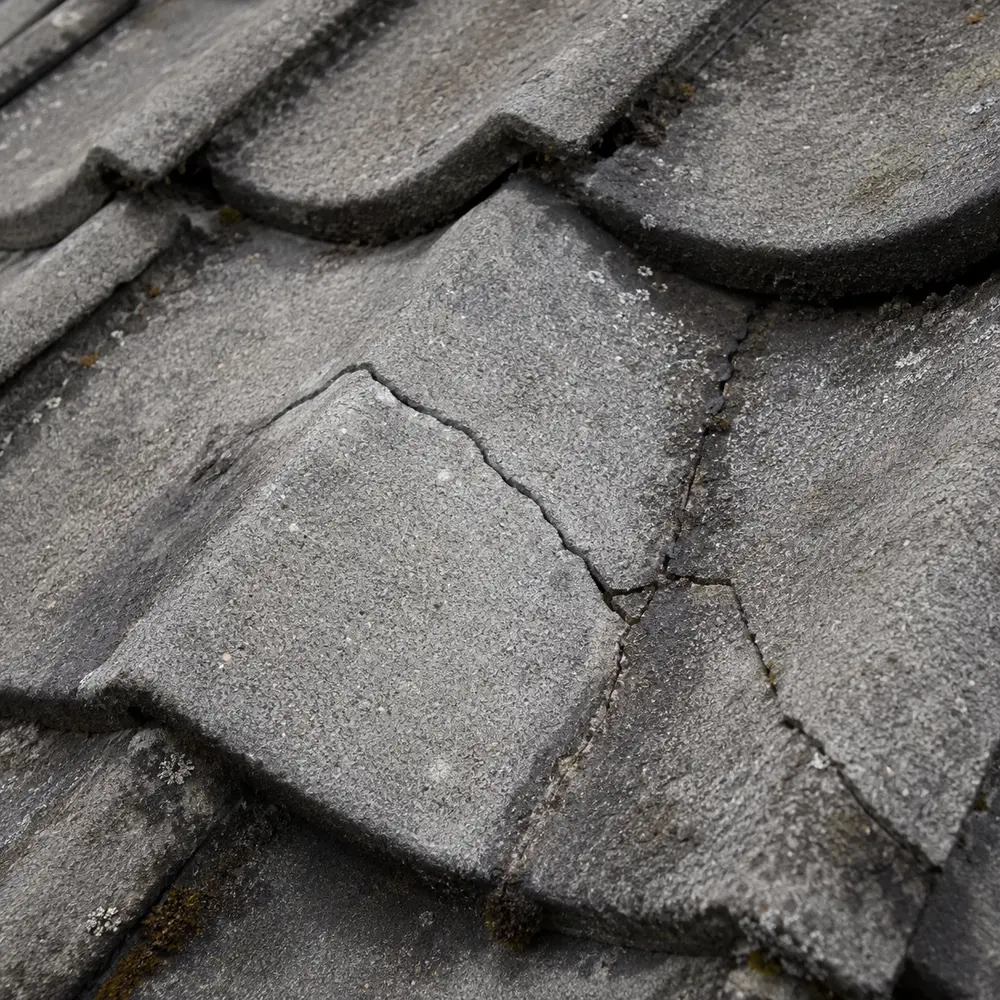
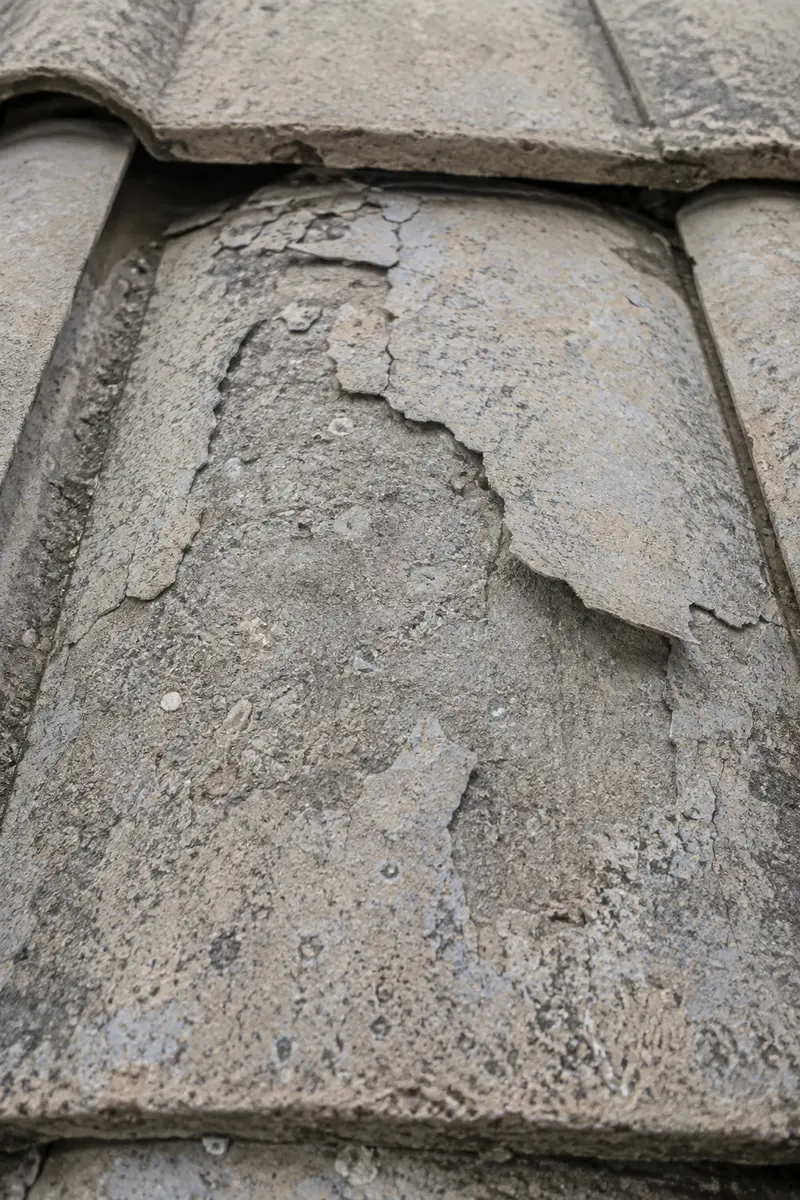
Surfaces Flaking Away Altogether
Further along the same road, the face of the tile starts shedding in flakes and the colour goes with it. A roof that was uniform grey or brown fades patchy and rough, and moss finds it far easier to take hold on the worn surface, which then holds damp against the tile and speeds the whole thing up. It is cosmetic at first and structural eventually.
The Dormer Added Twenty Years Later
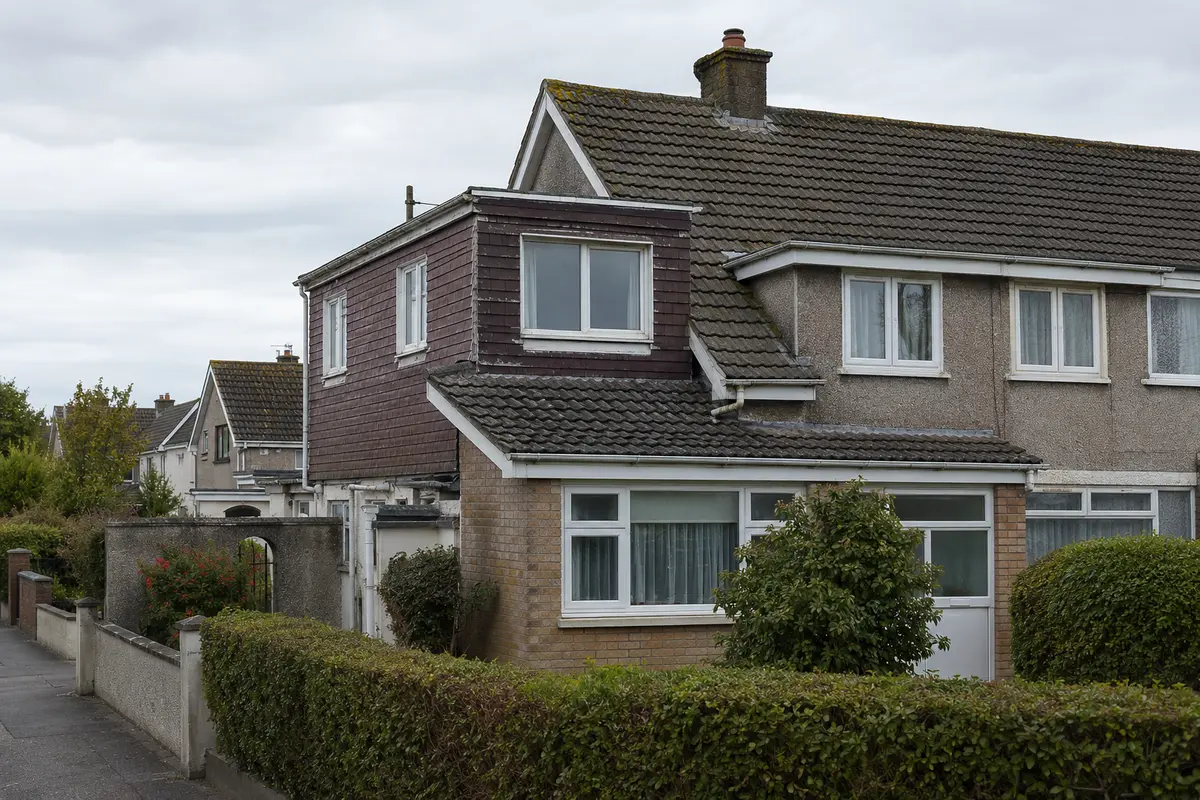
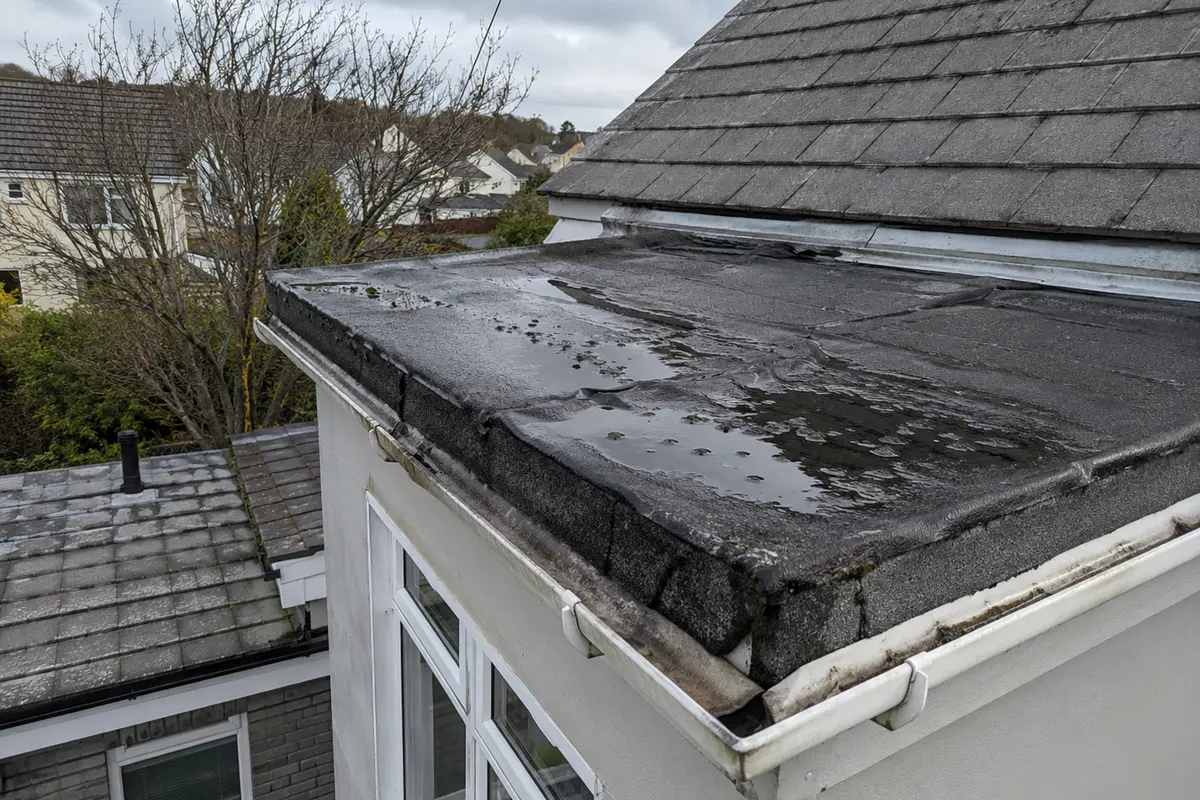
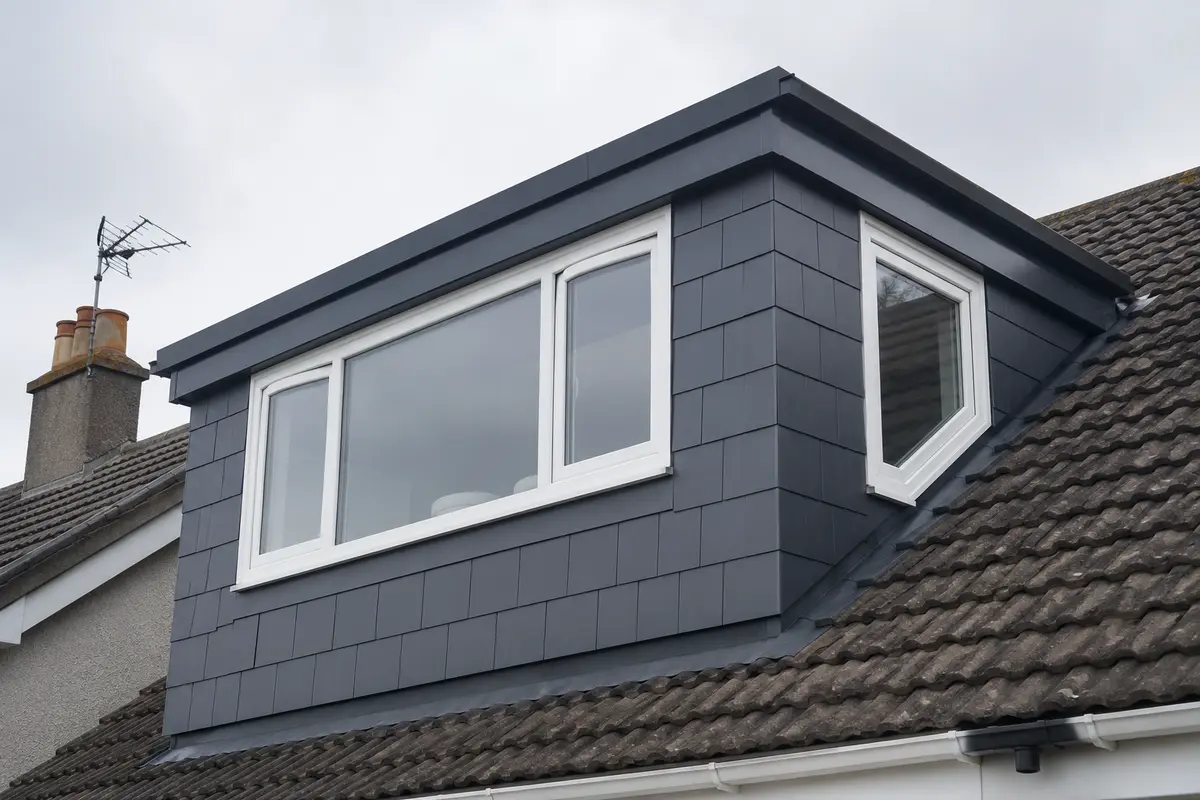
A great many of these houses gained an attic conversion through the 1970s and 80s, and that dormer is now decades old itself. The junction where it meets the original roof, the flashings around it, the cheeks at either side and the small flat roof on top are the details most likely to be letting water in, and very often the damp patch in a converted bedroom has nothing to do with the main roof at all.
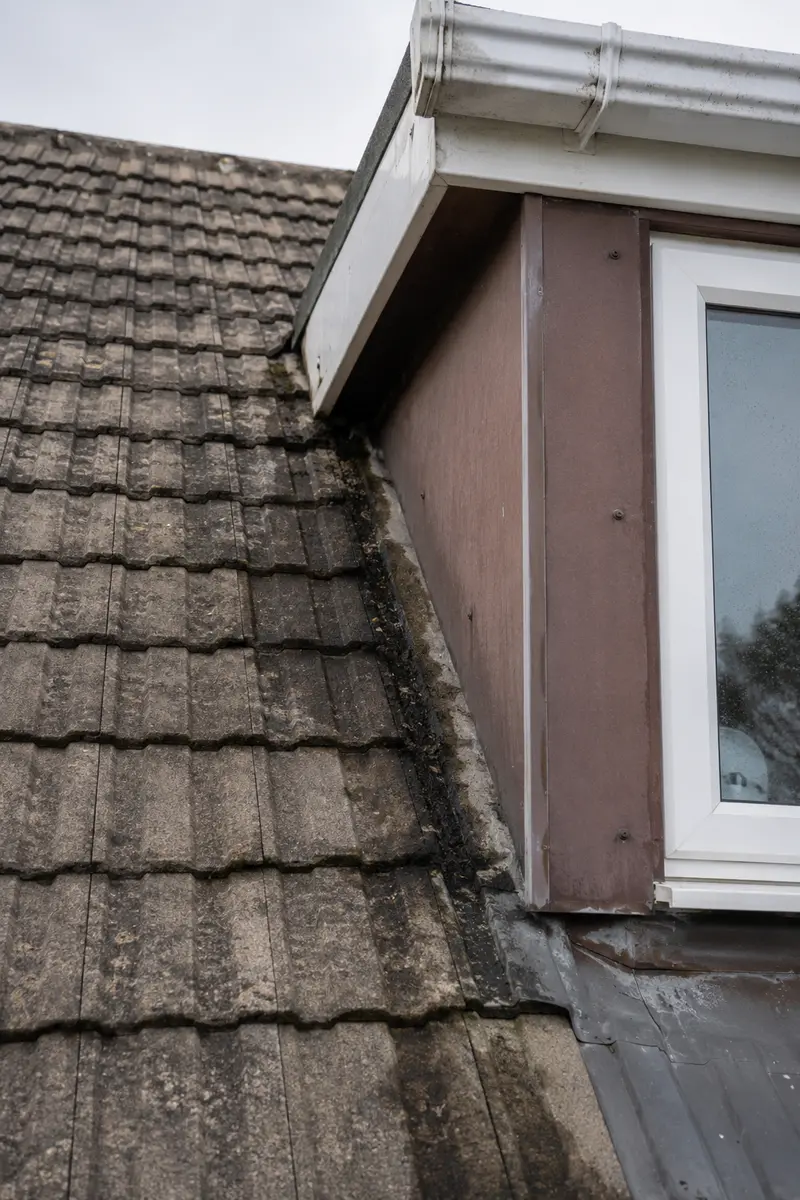
The Conversion Is Often the Smaller Job
Because so many of these houses were extended upward in the 1970s and 80s, a good share of the calls we take from these estates are about a converted bedroom rather than the main roof. That is usually welcome news for the owner. A dormer, its flashings, its cheeks and the small flat roof on top can all be renewed on their own, and it is a fraction of the cost and disruption of a full replacement.
What we will not do is quote for the dormer and stay quiet about the rest. If the main roof is still sound we will say so and do the smaller job. If the tiles are breaking down generally as well, you deserve to know that before you spend, so you can decide whether to do the dormer now and the roof later or take both together while the scaffold is up. Either way it is your call, made with the full picture.
The Estates of This Period
Along the northside belt this covers Beaumont, Santry and Elm Mount, with Artane straddling the change from one era to the next. Where a road went up earlier and carries warm clay tile instead, that is covered on our 1930s to 1950s roof replacement page, and the belt as a whole sits within north Dublin city.
If it is the flat roof on a dormer or an extension giving trouble, the free flat roof checker gives you a quick read, and flat roof repairs covers that work. For the bigger picture there is roofing costs in Dublin and the free roof health check. When you want certainty, 1960s to 1970s roof replacement in Dublin starts with a free inspection.
Questions From the Concrete Tile Estates
Every house on our road looks the same. Will they all need doing?
Can the tiles be cleaned or sealed instead of replaced?
The leak is in the converted attic room. Is that the whole roof?
Are these roofs worth replacing, or should we wait?
What Dublin Homeowners and Businesses Say
We have never asked anyone for a review, and we have never taken one down. Our perfect 5.0 rating from 41 Google reviews is simply what people wrote once the job was finished, tidied and paid for.
“I had water dripping right over the front door. They repaired the gutter joint within 20 minutes and didn’t try to upsell anything. Very honest service.”
Verified Google review
“Our old fascia and soffits were literally falling apart. The team replaced everything over two days and cleaned up the mess before leaving. The house looks fresher than it has in years.”
Verified Google review
“I was dealing with a damp patch spreading around the chimney breast. They found the cause immediately and resealed everything properly. Haven’t seen a single leak since.”
Verified Google review
Losing a Few More Tiles Every Winter?
A free inspection tells you whether the roof has years left or is on its way out, and whether the leak is the main roof or the conversion. Honest either way, from a family-run Dublin roofer since 1989.
- Free inspection and a written quote
- 20-year guarantee on our work
- Family-run since 1989, fully insured
Rated 5.0 on Google from 41 reviews