
1930s to 1950s Roof Replacement in Dublin, the Clay Tile Houses
The first wave of suburban Dublin, pebbledash and warm clay tile on hipped roofs. Matched, replaced and finished properly by a family-run roofer since 1989.
The First Houses Out of the City
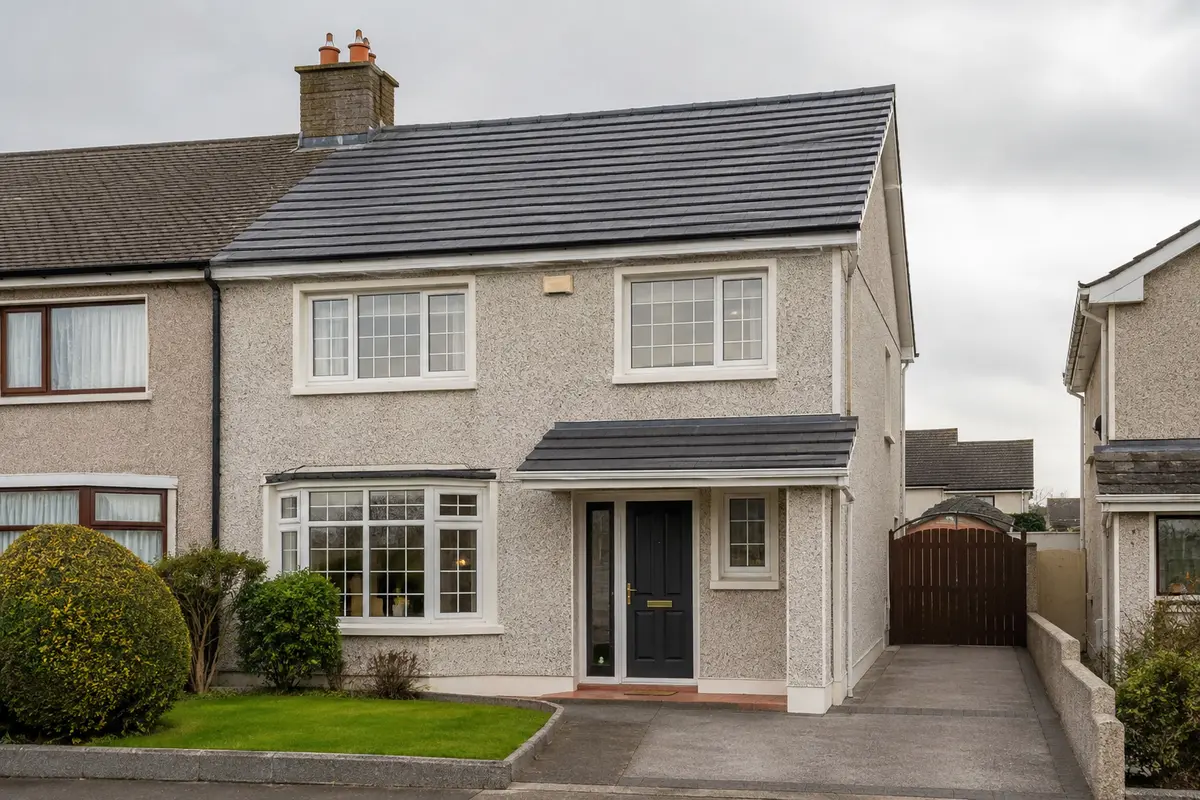
1930s to 1950s roof replacement in Dublin means working on the earliest of the suburban housing, the streets that took the first families out of the inner city. Donnycarney, Whitehall and the original village end of Killester belong to this wave, along with Crumlin and Drimnagh on the far side of the city, laid out as long uniform runs of pebbledash terraces and semis with hipped roofs in warm clay and red tile.
They were built solidly and they have earned their keep. What is finished on them now is not the house, it is the roof covering, because tile, felt and nails are consumable parts and these ones have been working since before most of us were born. Our mid-century roof replacement work covers the whole era, and this is the older half of it.
Where a Clay Tile Roof of This Age Gives Way
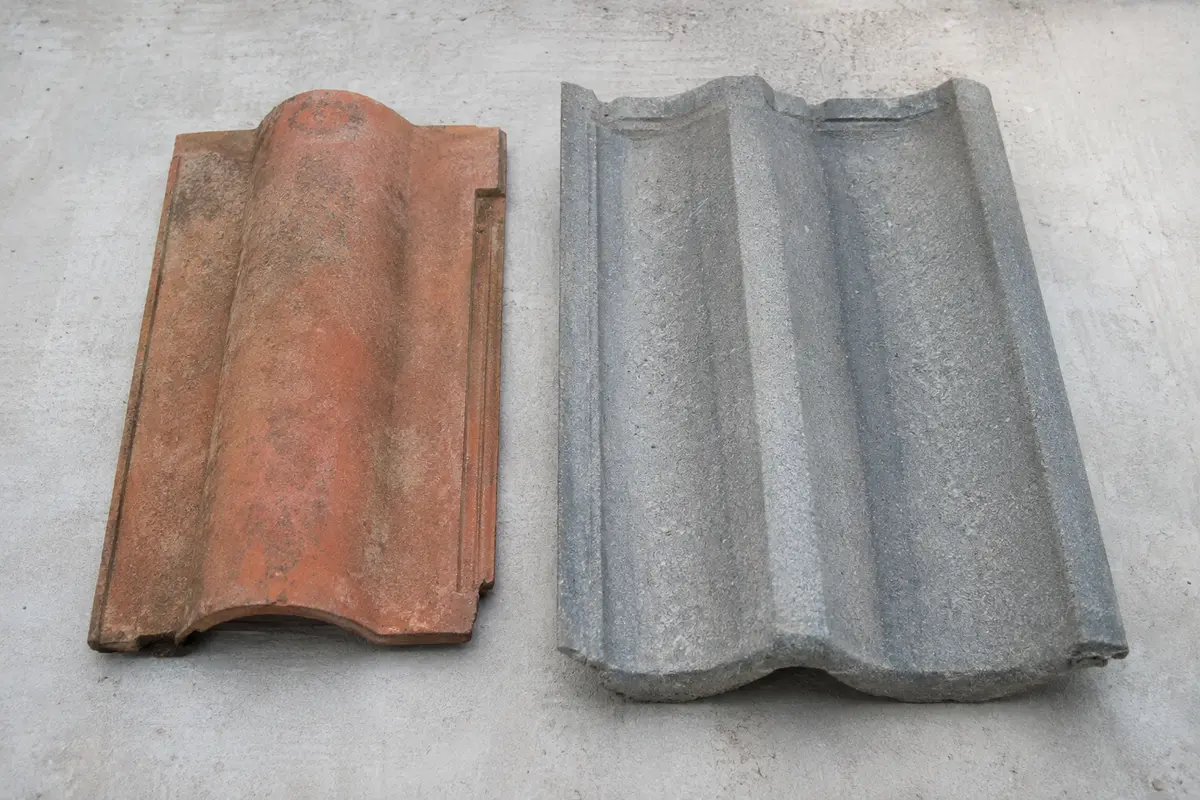
These roofs fail in a pattern of their own, different to the grey concrete tile that came later. Knowing which of these has started is what separates a repair from a replacement.
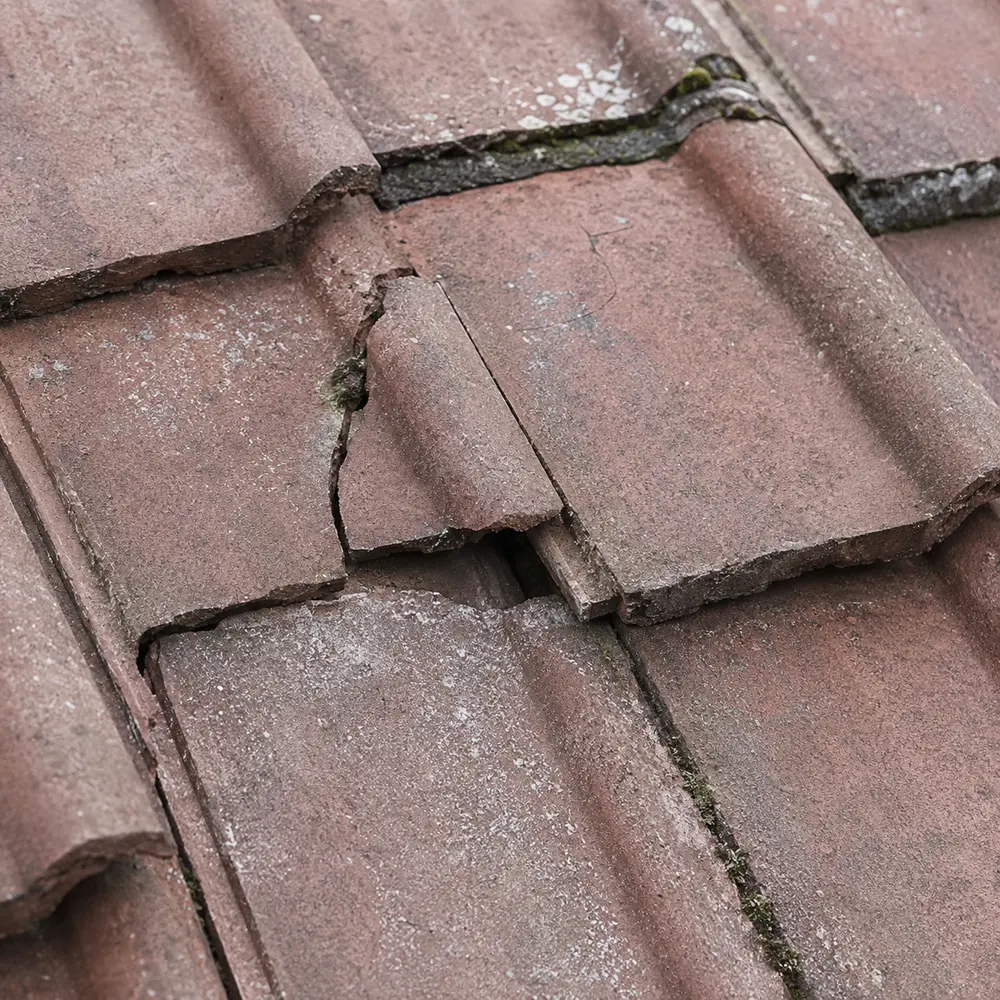
Clay Tile Gone Chalky and Soft at the Edges
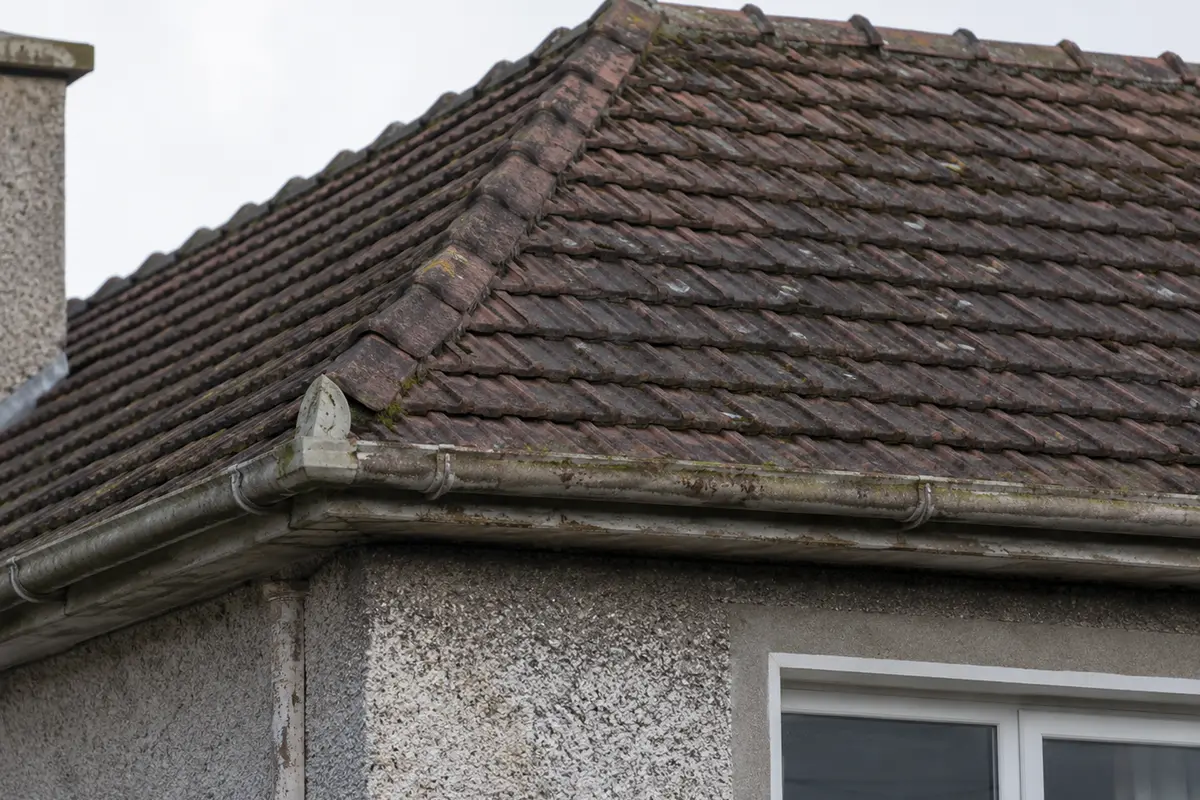
Old clay tile weathers differently to concrete. Rather than losing a surface layer it goes chalky and soft along the exposed edges and the nibs that hook it over the batten, and once those nibs start crumbling the tile is no longer properly held. On a roof where that has begun generally, individual replacements stop being a sensible answer because there is nothing sound left to hang the new tile beside.
The Cement Ridge That Has Never Been Touched
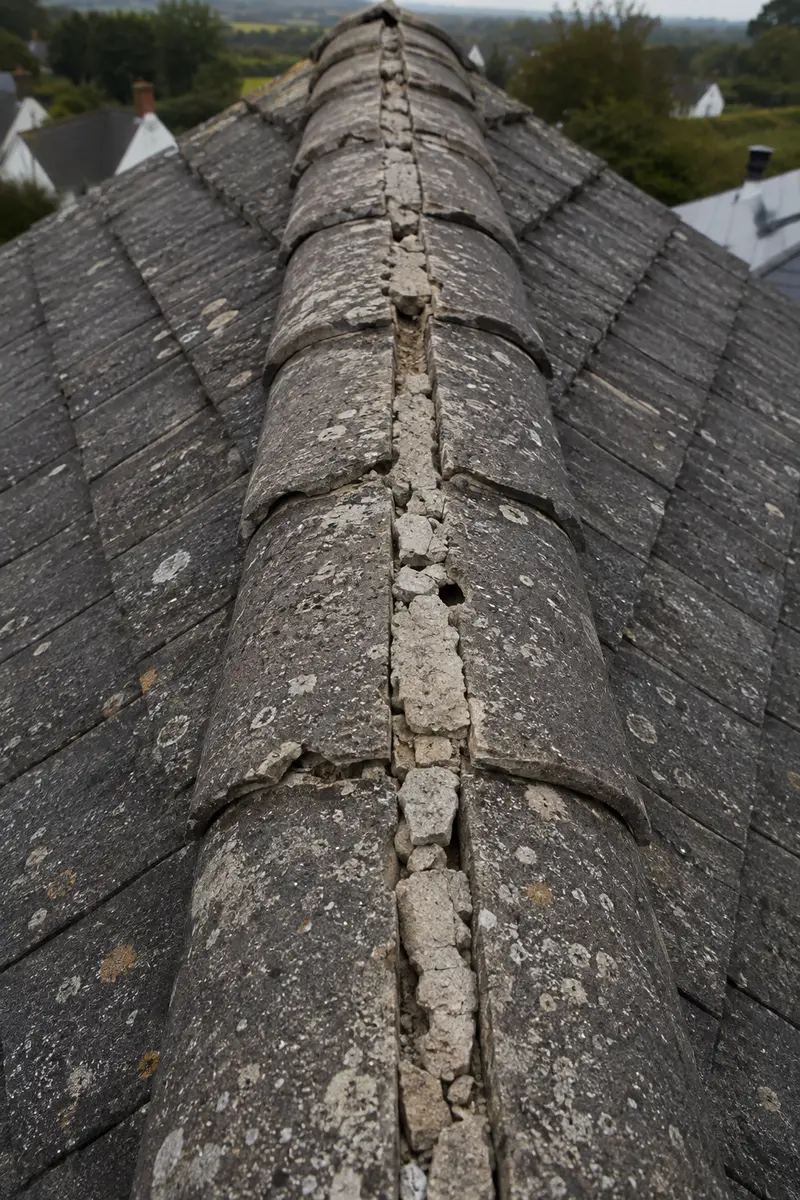
These roofs were finished with ridge and verge tiles bedded in cement mortar, and on a great many houses of this era that mortar is the original. Seventy-odd years of frost has cracked it, gone sandy and dropped it out in lumps, leaving ridge tiles sitting loose along the top of the roof and the verge open to wind along the gable. It is the single most common thing we find on these roofs, and it is often the first thing to actually come off in a storm.
Original Felt That Has Simply Given Up
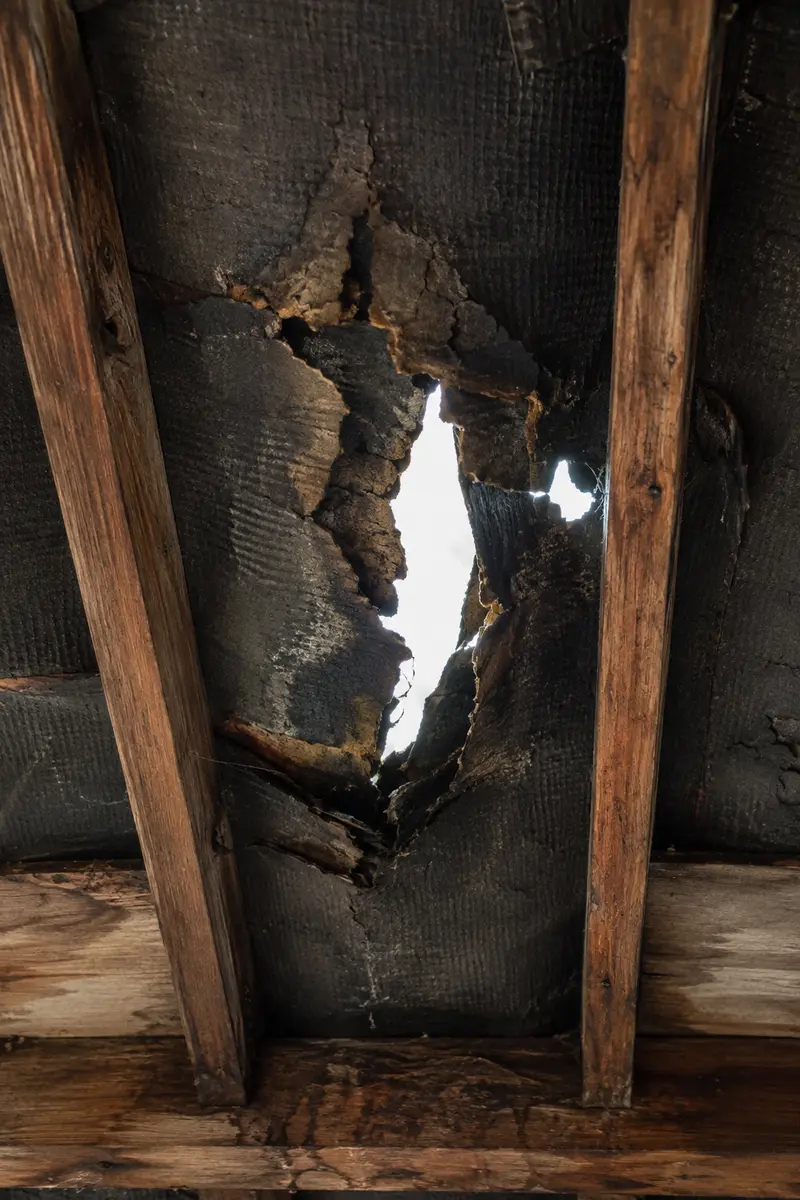
Under the tile sits bitumen felt that was the roof s second line of defence. On a roof of this age it has gone black and brittle, and it tears along the rafters under its own weight, so there is nothing behind the tile any more. You can usually see it for yourself from inside the attic on a bright day, hanging in strips or gone entirely between the timbers.
Batten Nails Rusted Into Nothing
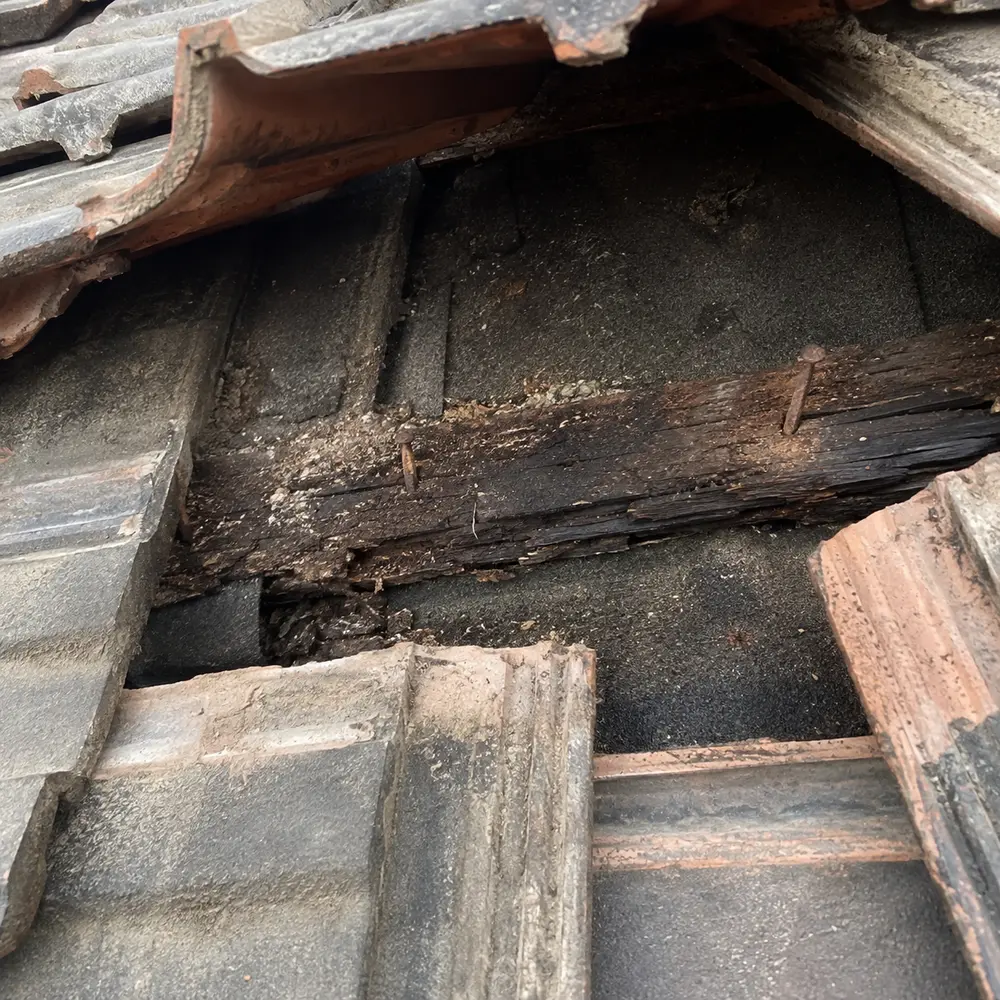
The nails holding the battens and the tiles have had decades of small leaks running past them. They rust down to a fraction of their original thickness, and the timber around them softens and gives, which is why a roof of this age can look sound from the road while individual tiles slip after every windy night. Once the roof is open the state of the fixings is obvious immediately.
Matching the Road, Not Just the House
On a street where every house went up together, the roof is part of a shared line rather than a private decision. Get the colour or the profile wrong and it reads from the far end of the road, and no amount of good workmanship underneath makes up for it. That is why we start by looking at what is actually on your road, including any houses already done, and match to that rather than to whatever is easiest to order.
The rest of the job is the standard one. Strip the old tile and felt back to the rafters, replace any battens and rafter ends that have gone, lay a modern breathable membrane, and finish the ridge and verge in a mortar-free system so the part that failed last time cannot fail the same way again. You end up with the roofline the street has always had and none of the maintenance the old one needed.
The Streets This Era Built
On the northside this is the belt running out along Collins Avenue and the Swords Road. Donnycarney and Whitehall are the heart of it, and the original bungalow end of Killester belongs here too, with Artane arriving at the tail of the period. The same years built Crumlin, Drimnagh and Walkinstown on the south city side.
Where a road went up later, in the 1960s and into the 70s, the roof over it is usually grey concrete rather than clay and behaves differently, which is covered on our 1960s to 1970s roof replacement page. For guide figures see roofing costs in Dublin, or start with the free roof health check. When you want a proper look, 1930s to 1950s roof replacement in Dublin starts with a free inspection and an honest answer.
Questions About Older Clay Tile Roofs
Can you match the original clay or red tile?
Is a clay tile roof better or worse than the later concrete ones?
Our ridge tiles are loose. Is that a repair or the whole roof?
These houses were built to last. Does the roof really need replacing?
What Dublin Homeowners and Businesses Say
We have never asked anyone for a review, and we have never taken one down. Our perfect 5.0 rating from 41 Google reviews is simply what people wrote once the job was finished, tidied and paid for.
“I had some serious roof damage after a storm, and The Roofing Academy came through for me. They gave me a great quote and fixed everything within days”
Verified Google review
“I had a roof leak that needed urgent attention, and The Roofing Academy responded quickly. They were so professional, and the repair was done perfectly.”
Verified Google review
“I had The Roofing Academy replace my roof, and they did an excellent job. They kept me informed throughout the process, and the new roof looks great”
Verified Google review
Still on the Original Clay Tile?
A free inspection, a look in the attic, and a straight answer on whether the roof needs replacing now or has years left. Matched to your road, from a family-run Dublin roofer since 1989.
- Free inspection and a written quote
- 20-year guarantee on our work
- Family-run since 1989, fully insured
Rated 5.0 on Google from 41 reviews