Last updated: August 2026
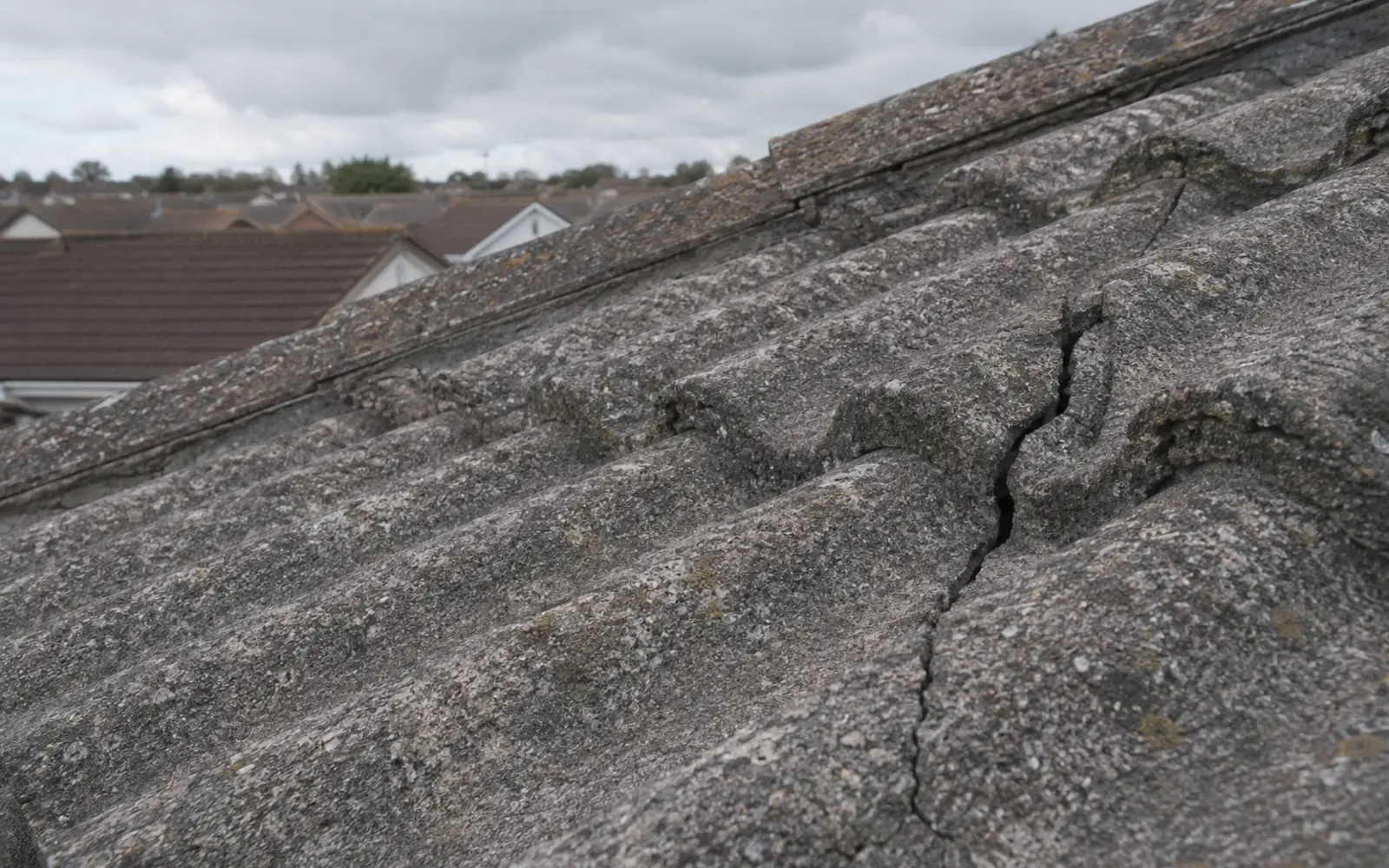
The dry ridge vs mortar ridge question comes up on almost every Dublin re-roof, and it is one of the few genuine improvements in roofing over the last few decades. The old cement-bedded ridge is the single most common thing we find failing on a mid-century roof, and it fails for a reason that cannot really be designed out of it.
Why a Cement Ridge Cracks and Lets Go
On an older roof, the ridge tiles along the top and the verge tiles along the gable are bedded in cement mortar. It was the standard way of doing it for generations and it works, for a while. The problem is that mortar is rigid and a roof is not.
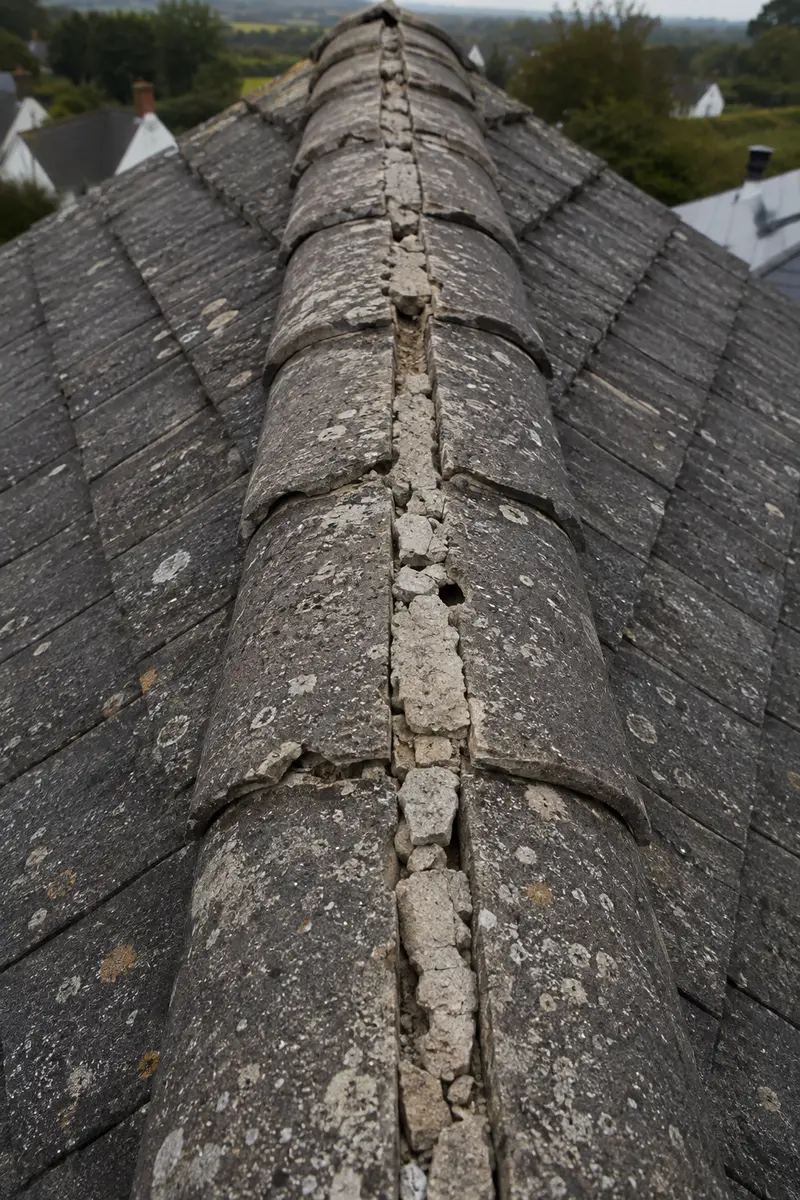
Timber moves with heat and damp, tiles expand and contract, and wind pushes at the highest line on the building. The mortar cannot flex with any of that, so it cracks. Water gets into the cracks, frost expands it, and over enough winters the bedding goes sandy and drops out in lumps, often turning up in the gutter as grit long before anyone looks at the ridge itself.
At that point the ridge tiles are held by whatever mortar is left rather than by anything reliable, on the most exposed line of the roof. It is why ridge tiles are one of the most common things to come down in a storm.
What a Dry Ridge System Actually Is
A dry ridge does the same job mechanically instead of chemically. The ridge tiles are screwed down onto a batten through fixings designed for the purpose, with a ventilated roll or profiled filler along each side that seals the gap against weather and birds while still letting air move.
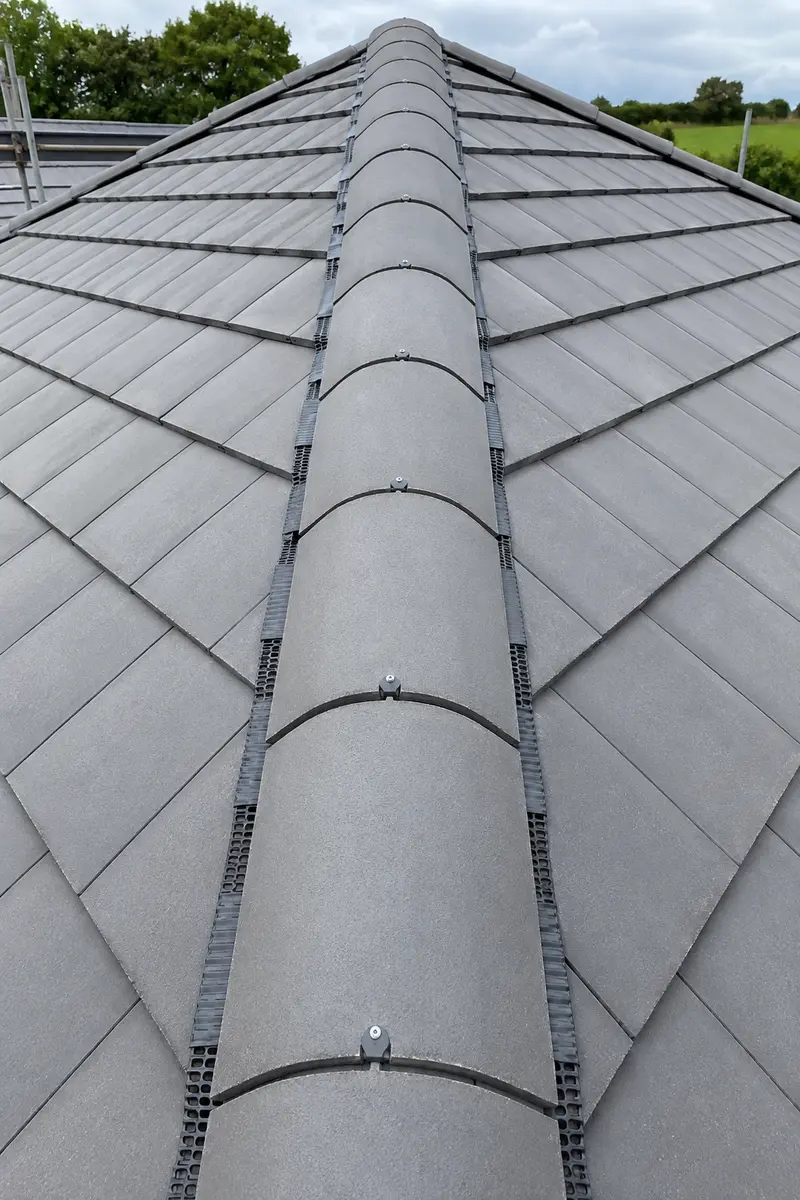
Because nothing is relying on a rigid bed of cement, the roof can move as it always did without cracking anything. Fixings hold the tile down, the roll accommodates the movement, and there is no maintenance cycle of repointing every decade or two.
The same idea applies along the gable as a dry verge, which is worth having on an exposed site, because a verge whose mortar has dropped out is precisely where wind gets under the edge of a roof.
The Ventilation You Get With It
There is a second benefit that matters more in a mid-century house than people realise. A dry ridge is ventilated by design, so air can leave the roof space at the highest point.
These houses were built long before anyone worried about condensation in a roof, and many have since had thick insulation laid in the attic without any matching increase in airflow. That combination traps moist air against cold timbers and produces damp staining that looks exactly like a leak. Ventilating the ridge is part of putting that right.
Whether It Is Worth Changing To
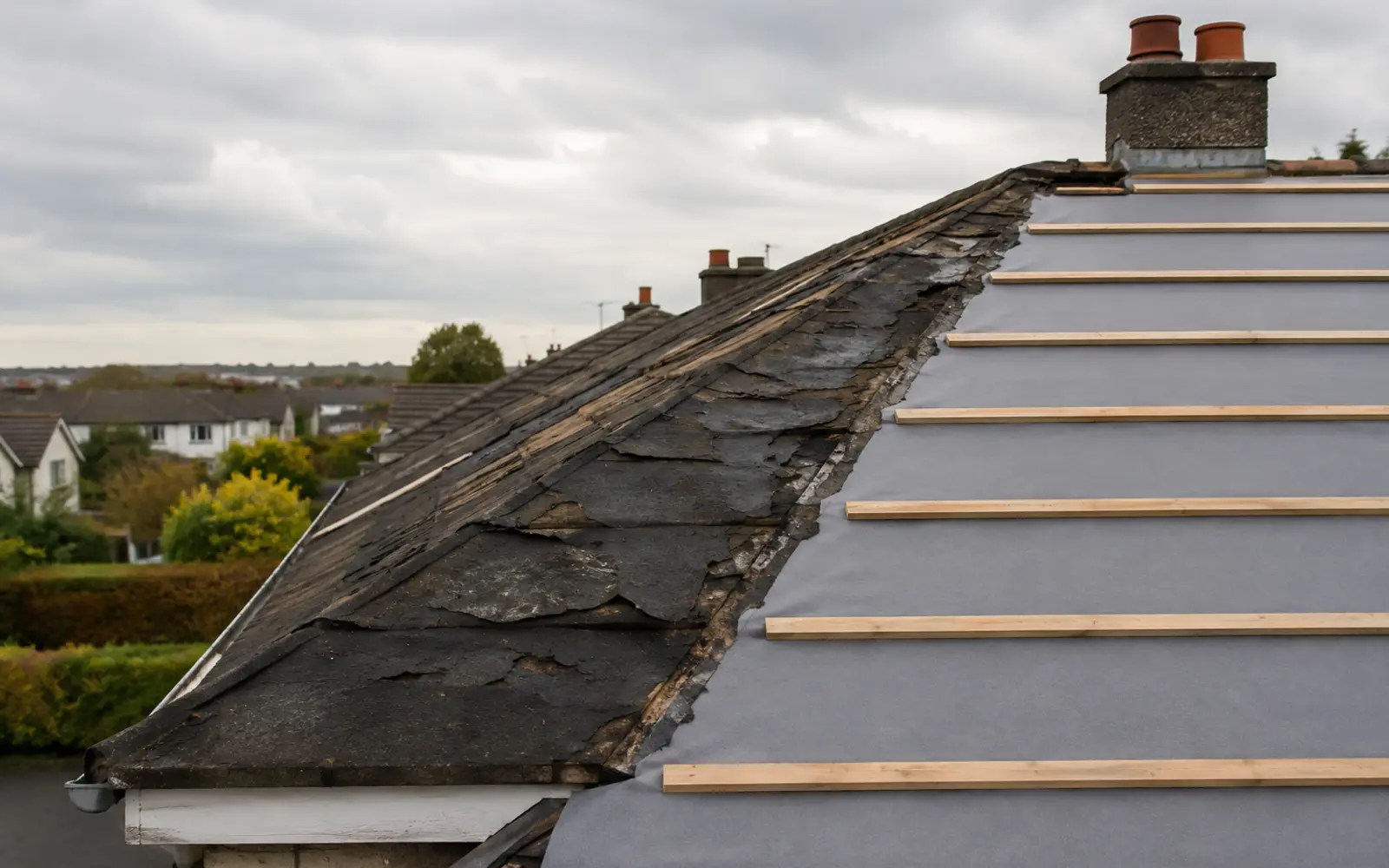
On a full re-roof, in our view yes, and it is a small part of the overall cost. You are replacing the covering anyway, the ridge has to be dealt with regardless, and doing it mortar-free removes the part of the old roof most likely to need attention again in ten or fifteen years.
As a standalone job on an otherwise sound roof it also makes sense where the existing bedding has gone. Re-bedding in fresh mortar is cheaper on the day and starts the same clock running again. Converting to a dry ridge costs a bit more and does not.
What we would not do is tell you a sound cement ridge needs replacing. Plenty of them have years left, and if yours is intact we will say so.