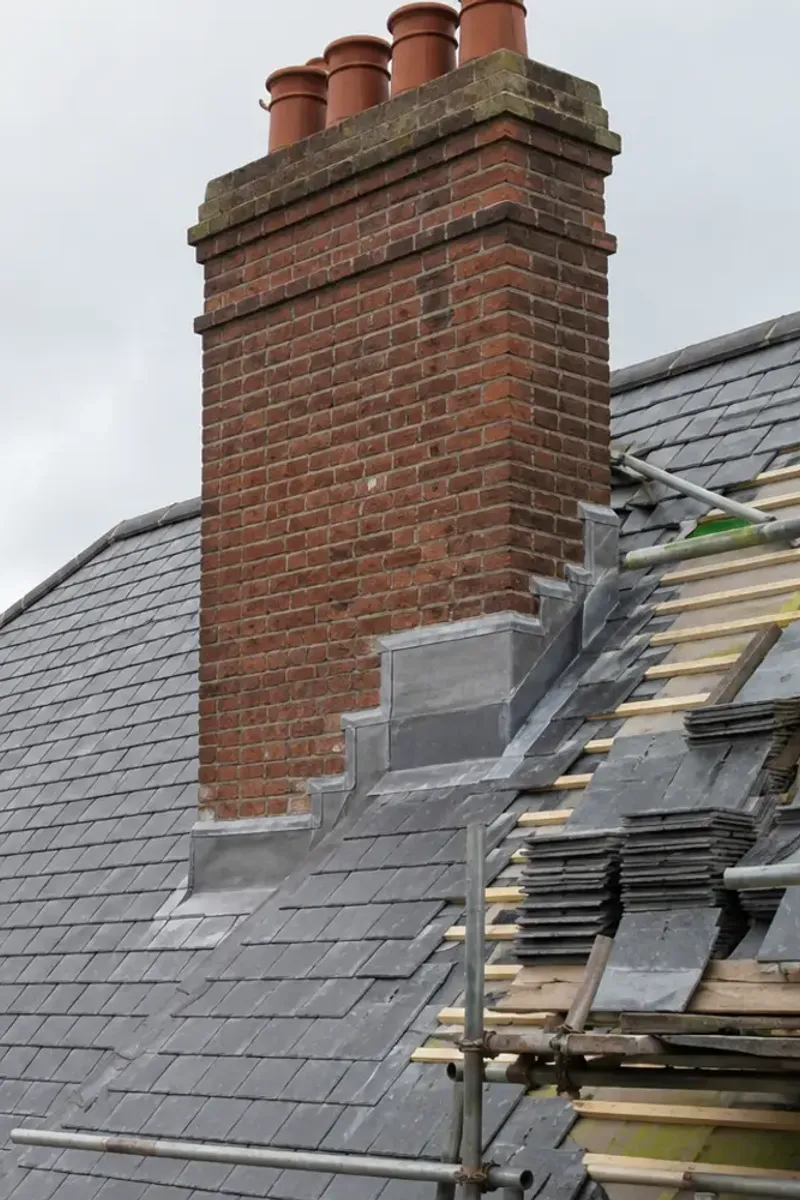
Period Roof Restoration in Dublin, Victorian and Georgian Roofs Done Right
Natural slate, parapet gutters, lead valleys and chimney stacks on the south side's Victorian, Edwardian and Georgian homes, restored to last by a family-run Dublin roofer since 1989.
What Period Roof Restoration in Dublin Involves
Period roof restoration in Dublin means bringing an old roof back to sound condition the right way, in natural slate, lead and matching detail, so a Victorian terrace or a Georgian townhouse still looks its age and stays watertight for decades. The south side of Dublin is full of these roofs, red-brick Victorian and Edwardian terraces through Rathmines, Ranelagh and Rathgar, and tall four-storey Georgian houses closer to the city, and after a hundred years or more they reach a point where careful restoration is due.
We have been on Dublin's period roofs since 1989, and the work is different to a modern roof. The nails that hold the slate were iron and have rusted through, the gutters hide behind parapets and in the valleys between houses, the lead needs dressing by hand, and the chimney stacks stand tall and exposed. Getting it right takes a roofer who has done it before, matches the slate to the house, and knows where a period roof really leaks. That is the work we do, and every job starts with a free inspection and an honest written quote.
Victorian Slate Roofs and Georgian Parapet Roofs, Two Different Jobs
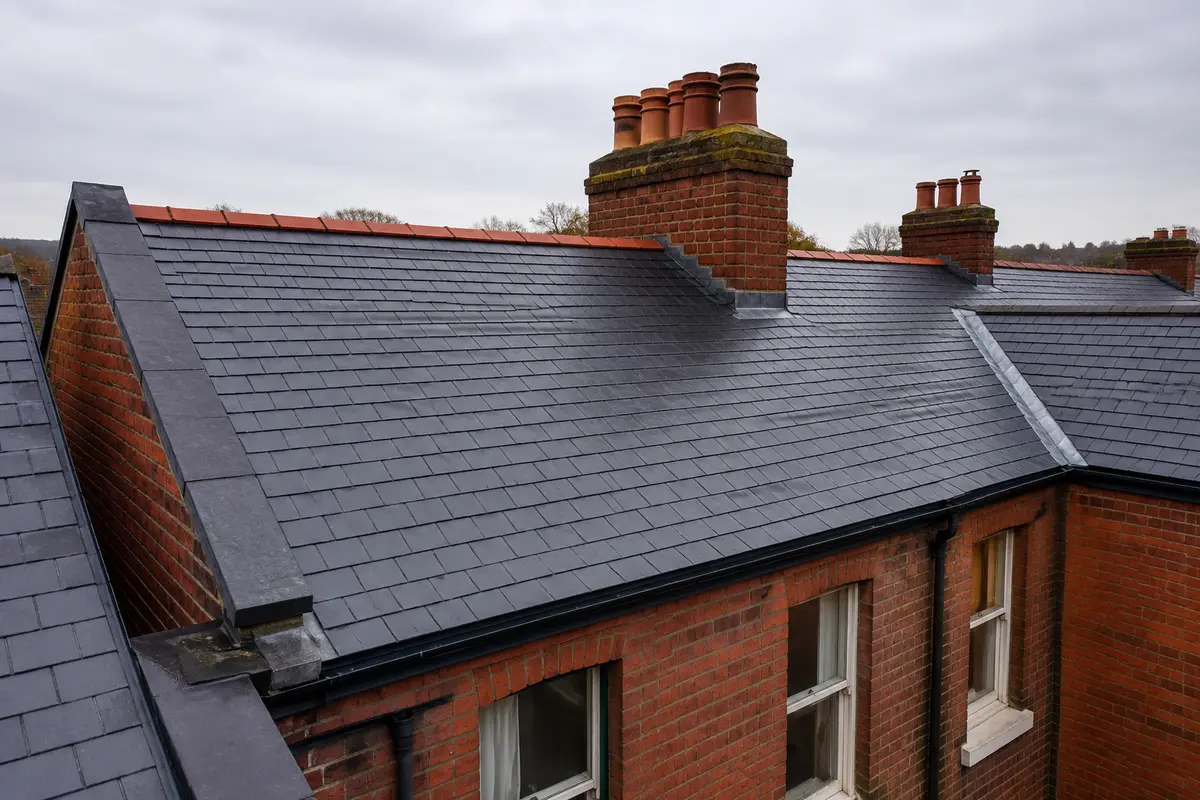
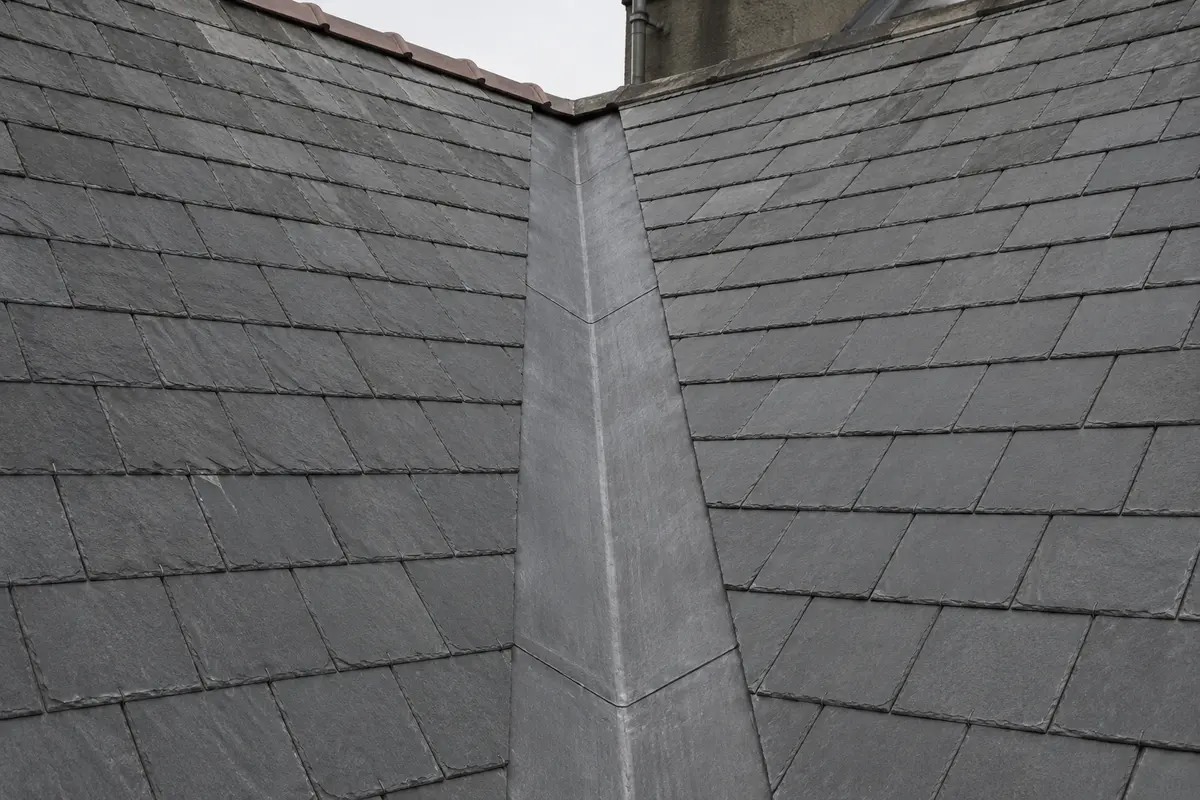
The two great periods of south Dublin housing carry two different roofs, and each needs its own approach. A Victorian or Edwardian terrace in Rathmines or Ranelagh is typically a pitched natural-slate roof with valley gutters running between the houses and shared chimney stacks on the party walls. The usual work is re-hanging slipped slate on new nails, re-lining the valleys in lead, and repointing the stacks, or a full re-roof once the fixings have gone across the whole roof.
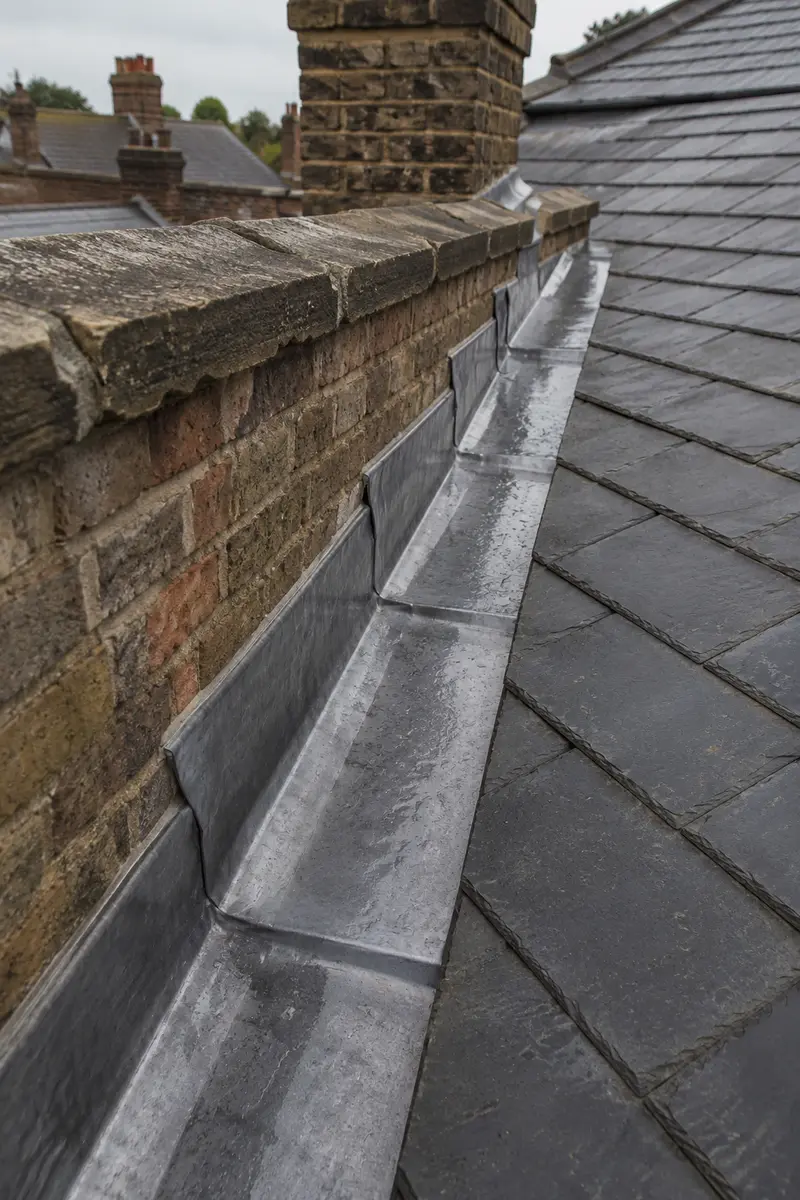
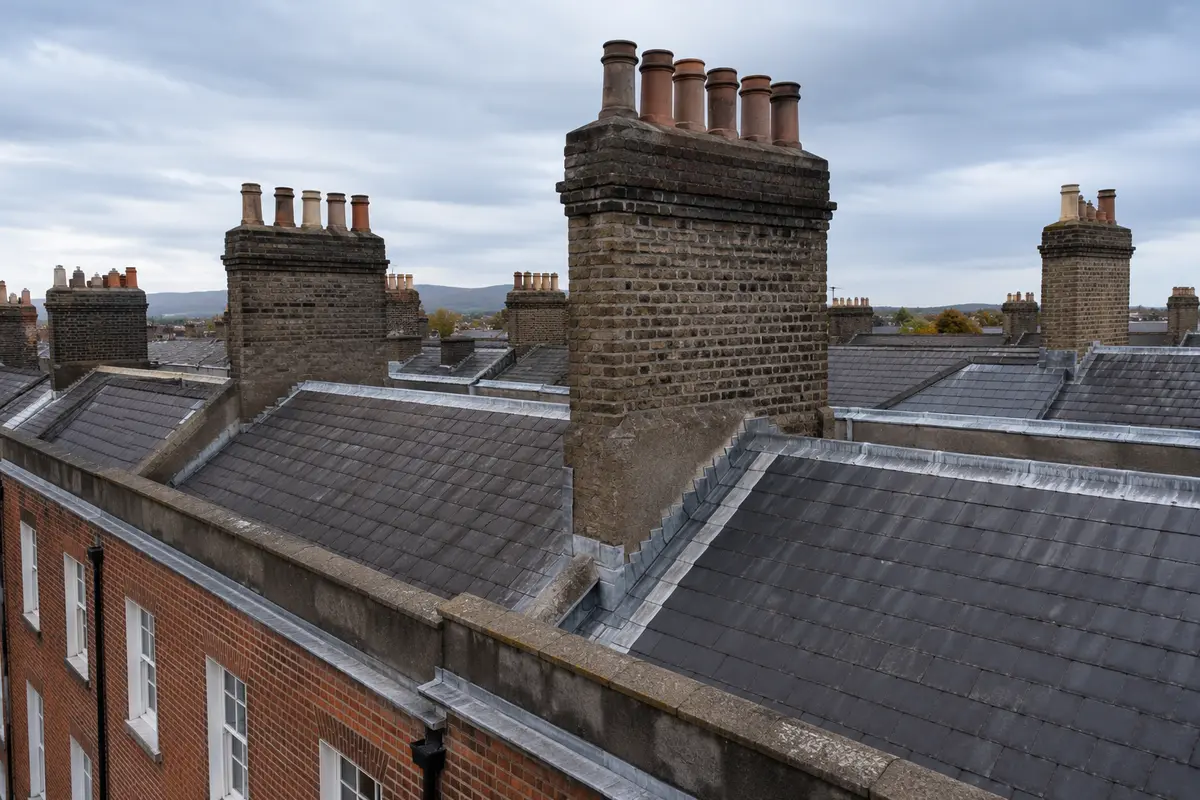
A four-storey Georgian house, more common toward the Dublin 2 core and the Georgian squares, often hides a lower-pitch or parapet roof behind a fine brick or rendered facade, drained by a lead-lined parapet gutter you cannot see from the street. These roofs leak at the parapet gutter and the box gutters first, so the restoration is as much about the lead and the drainage as the slate. Both jobs reward a roofer who has worked on them before, which after decades on the south side is exactly what we bring.
Signs Your Period Roof in Dublin Needs Restoring
Period roofs tend to give the same warnings as they reach the end of their first century. Any one of these is worth a free look before a small job turns into a big one, and our guide to the signs a period roof needs restoring walks through them all in detail.
Slates Slipping or Missing
Old iron nails rust through after a century, so slates start to slide and drop one by one. When slipping shows across the whole roof rather than in one spot, the fixings have gone and a re-roof usually beats endless patching.
Parapet or Valley Gutter Leaks
The hidden gutters behind a parapet, or in the valley between two terrace roofs, are where period roofs leak first. Old lead splits and old felt linings perish, letting water track into the top-floor ceilings and the party wall.
A Sagging Ridge or Dipped Roofline
A visible dip along the ridge or a wave in the slate line points to tired timbers underneath, often a hundred years old. It is worth looking at early, because sound timber is far cheaper to keep than to replace once rot sets in.
Crumbling Chimney Stacks and Flaunching
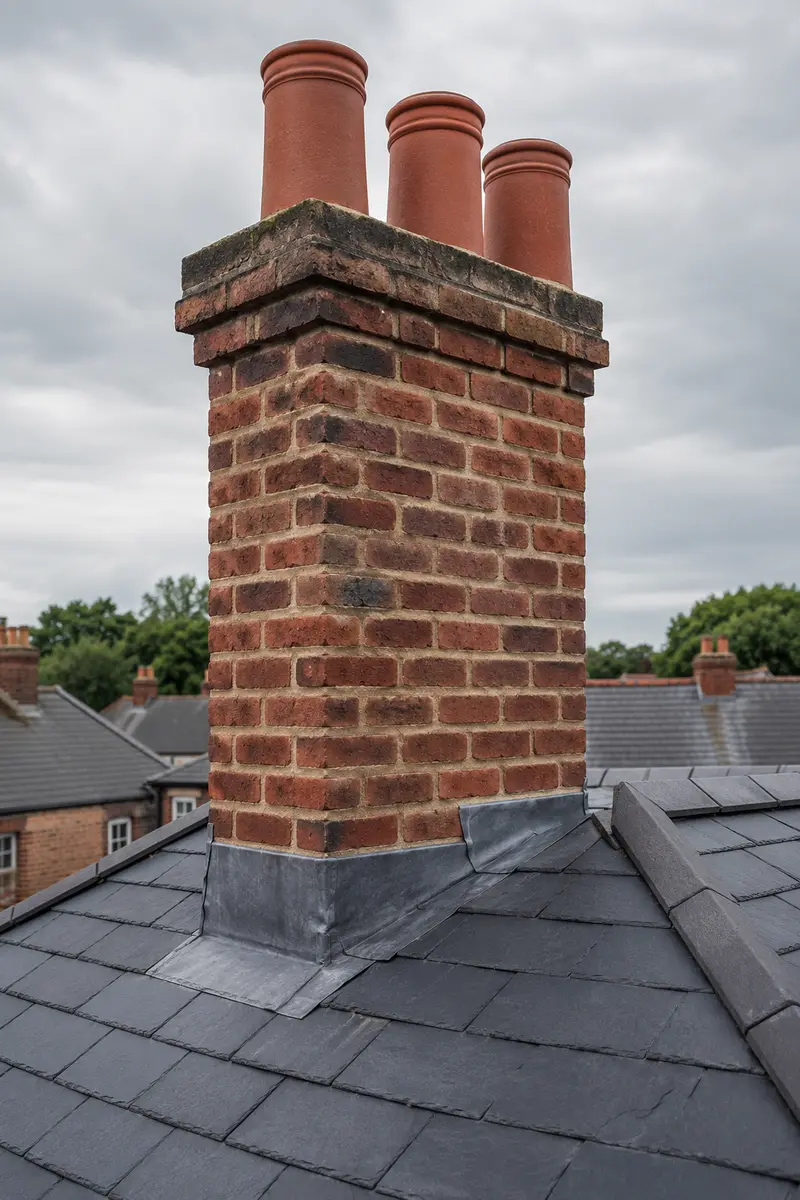
Tall Victorian and Georgian stacks take the worst of the weather. Perished mortar, cracked flaunching and loose pots let damp into the stack and the flashings around it, and left too long the brickwork itself starts to fail.
Damp Patches on Top-Floor Ceilings
A brown stain on an upstairs ceiling or high on a party wall is usually the roof, not condensation. On a period home it most often traces back to the lead work, the valley or a run of slipped slates above.
No Underlay Beneath the Slate
Most period roofs were laid straight onto battens with no breathable membrane, so once the slate lets go there is nothing behind it. A re-roof is the chance to add proper underlay and bring the roof up to a standard it never had.
How a Period Roof Restoration Works
Every period roof we restore follows the same considered order, so you know what is happening and why at each stage, from the first inspection through to the final sign-off.
We Read the Whole Roof First
Every restoration starts with a free inspection, and on a period roof that means far more than a look from the ground. We go over the slate, the ridge, the valleys and the parapet gutters, we check the lead around the stacks and along every abutment, and we look inside at the timbers and the top-floor ceilings where a leak shows first. On an old terrace the fault is rarely where the stain is, because water tracks along a batten or down a hidden valley before it ever drops, so we follow it back to the real source rather than guessing. You then get it in writing: what is sound and stays, what can be repaired, and what has genuinely reached the end of its life, with the reasoning behind each call so nothing on the roof is a surprise later.
A Careful Strip, and a Timber Check
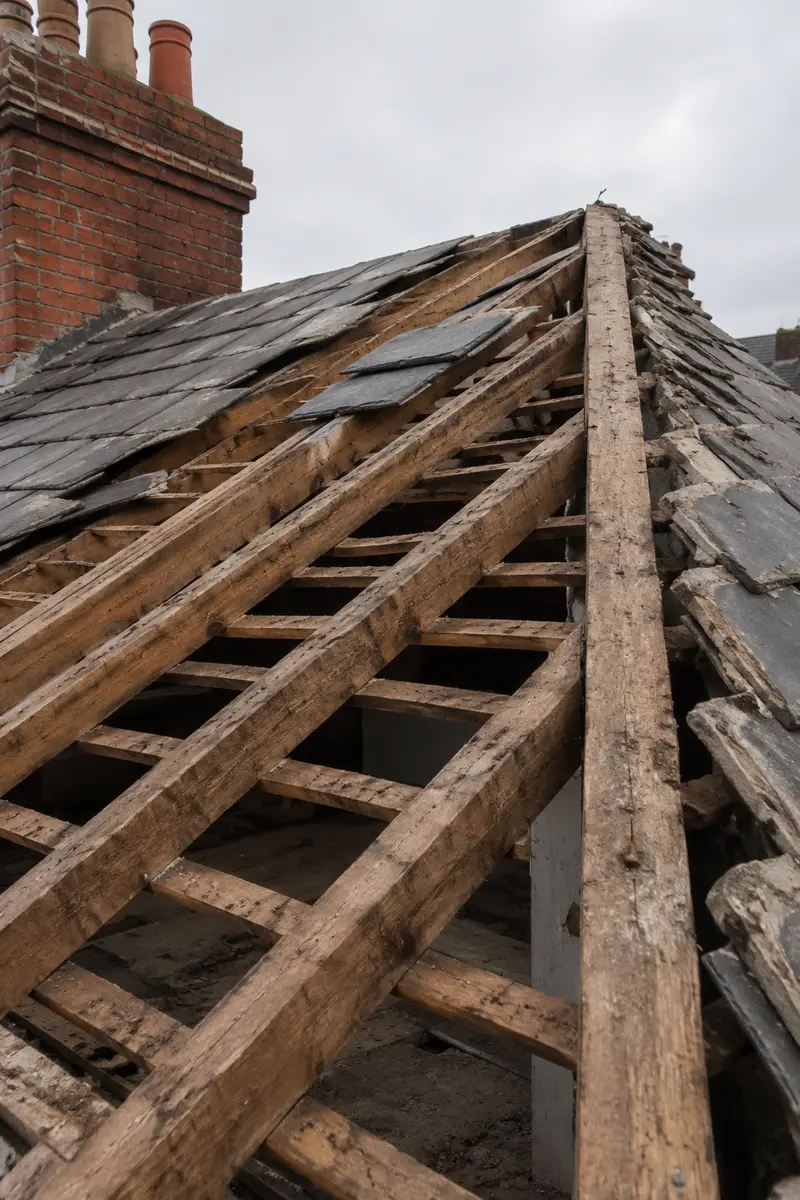
Where a full re-roof is the honest call, the old slate comes off by hand rather than being torn away, so the slate worth keeping is saved and set aside to reuse on the front elevation, where the match matters most. With the covering off, the roof structure is finally in full view, and this is the one chance to deal with it properly. We check the battens, the rafters and the wall plates for rot, woodworm and the slow sag that a century of weight leaves behind, and we repair or replace whatever needs it. Catching tired timber now, while it is exposed and the access is already paid for, costs a fraction of finding it after the roof has been closed back up.
Slate and Lead, Put Back to Match
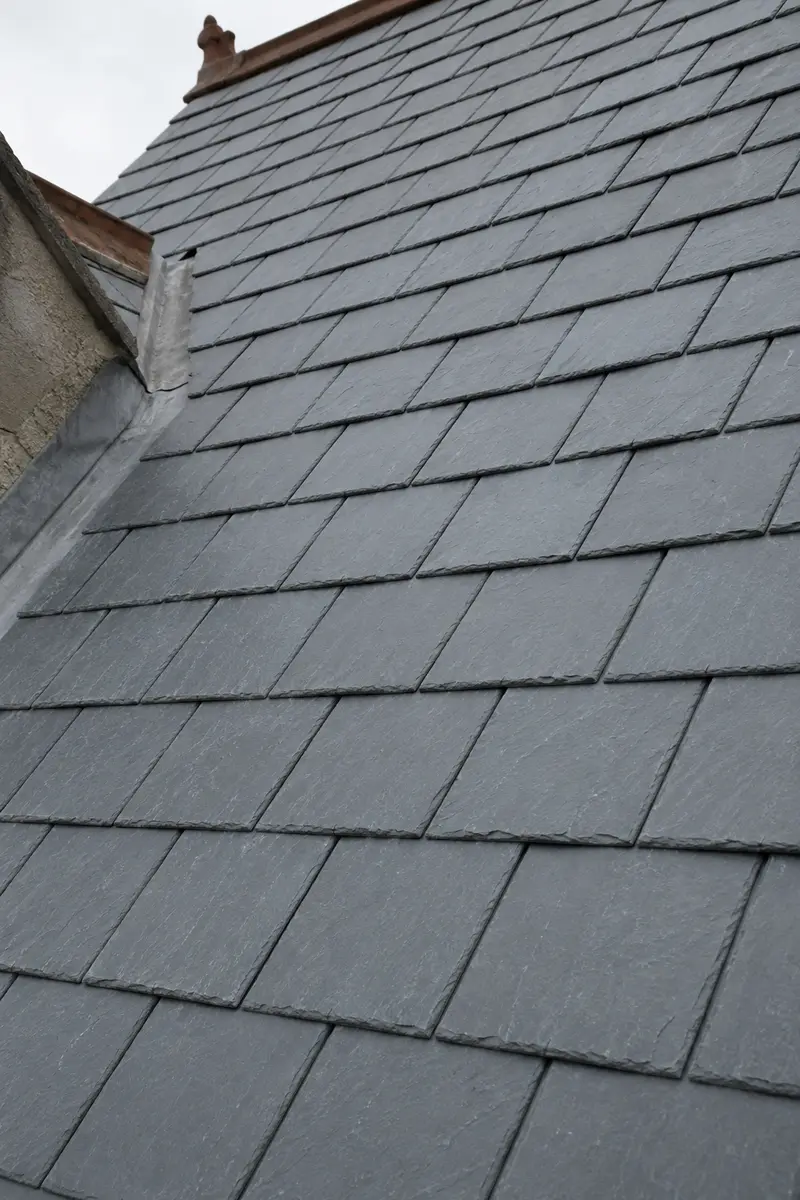
The roof goes back the way a period roof should. A new breathable underlay and fresh treated battens go on first, giving the roof the second line of defence it never had when it was built. The slate is then re-hung on non-corroding copper or stainless nails, gauged and coursed so it sits right, and every valley, parapet gutter, soaker and chimney stack is re-dressed in new lead, bossed and welted by hand rather than patched with mastic. Throughout, the finish is matched to the house, so the slate size, the coursing, the ridge and the lead detail all read correctly: a restored Victorian terrace still looks like a Victorian terrace, and a Georgian roof keeps its line behind the parapet.
Cleared, Guaranteed and Signed Off
When the work is finished the site is left clean, the old slate and waste are taken away, and the whole roof is checked over before we call it done. The work is backed by our guarantee and, after more than thirty years on Dublin’s period roofs, by a reputation we protect harder than anything else. What you are left with is a roof that looks right for the age of the house, sheds water the way it was meant to, and stays sound for decades, not a patch that buys one winter and puts you back on the phone the next autumn.
What Does Period Roof Restoration Cost in Dublin?
Period roof restoration in Dublin is priced on the roof in front of us, because a targeted repair and a full re-roof of a large terrace are very different jobs. Re-hanging a run of slipped slates or re-lining a leaking valley in lead is a modest figure, while a full period re-roof, with new underlay, battens, natural slate and fresh lead throughout, is the bigger spend and is set by the size of the roof, the access and the amount of slate and lead involved. A tall four-storey Georgian house costs more to reach and work on safely than a two-storey terrace.
Rather than a phone guess, we measure the roof and give a written price after a free inspection, so you know the figure before any work starts. For guide numbers while you budget, our roofing costs in Dublin page sets out typical repair and re-roof prices, and the new roof cost guide walks through what drives a full re-roof. If you are weighing repair against replacement, the guide on whether you need a new roof lays out the signs.
Period Roofing Across the South Side of Dublin
The south side of Dublin is where the city's period housing sits, and it is where most of our slate, lead and restoration work is. The red-brick Victorian and Edwardian terraces of Rathmines, Ranelagh, Rathgar, Portobello and Harold's Cross carry pitched slate roofs with shared valleys and stacks, the streets around Ballsbridge, Donnybrook and Sandymount mix period terraces with larger detached period homes, and the squares and townhouses of Georgian Dublin bring the tall four-storey parapet roofs. The coastal and bayside homes take the worst of the weather, so the seafront Victorian and Edwardian roofs of Blackrock, Dún Laoghaire and Clontarf across the bay carry their own salt-driven wear. Each has its own quirks, and after decades working across them we know where each one tends to fail.
Wherever your period home is on the south side, the offer is the same: a free inspection, an honest steer on whether a careful repair or a full restoration makes more sense, natural slate and lead put back to match the house, and a clear written price with nothing hidden. You can see every part of the city we cover on our Dublin areas page, read more on slate and tile roofing and re-roofing in Dublin, or check your own roof first with our free roof health check. When you are ready, honest period roof restoration in Dublin is one free inspection away.
Period Roof Restoration Questions, Answered
What does period roof restoration in Dublin involve?
Can you repair an old slate roof or does it need replacing?
Do you match the original slate on a period home?
Why do Georgian and Victorian roofs leak at the parapet gutters?
Do you carry out roof restoration on four-storey Georgian houses?
How much does it cost to restore a period roof in Dublin?
Last updated: August 2026.
What Dublin Homeowners and Businesses Say
We have never asked anyone for a review, and we have never taken one down. Our perfect 5.0 rating from 41 Google reviews is simply what people wrote once the job was finished, tidied and paid for.
“I had The Roofing Academy replace my roof, and they did an excellent job. They kept me informed throughout the process, and the new roof looks great”
Verified Google review
“Great company to work with! The Roofing Academy fixed a leak in my roof quickly and professionally. I will definitely call them for any future roofing needs.”
Verified Google review
“The Roofing Academy went above and beyond. They fixed my roof and even helped me understand how to maintain it to prevent future issues. Excellent service.”
Verified Google review
Restore Your Period Roof, Properly
Victorian, Edwardian and Georgian roofs brought back in natural slate and lead, matched to the character of the house. Arrange a considered assessment with a family-run Dublin specialist who has worked these roofs since 1989.
- Natural slate, lead and period detailing
- Matched to the character of the house
- On Dublin's period roofs since 1989
Rated 5.0 on Google from 41 reviews