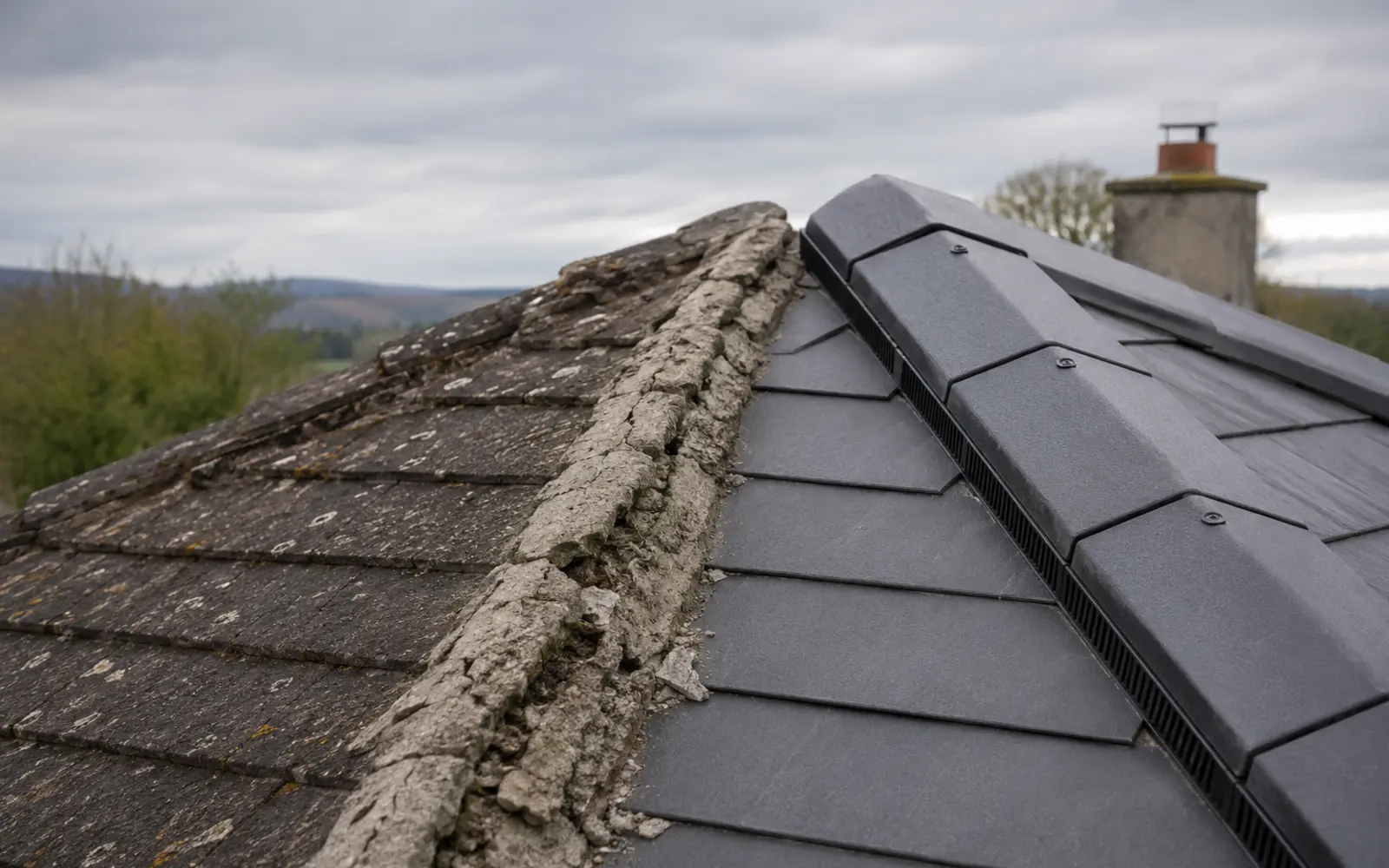
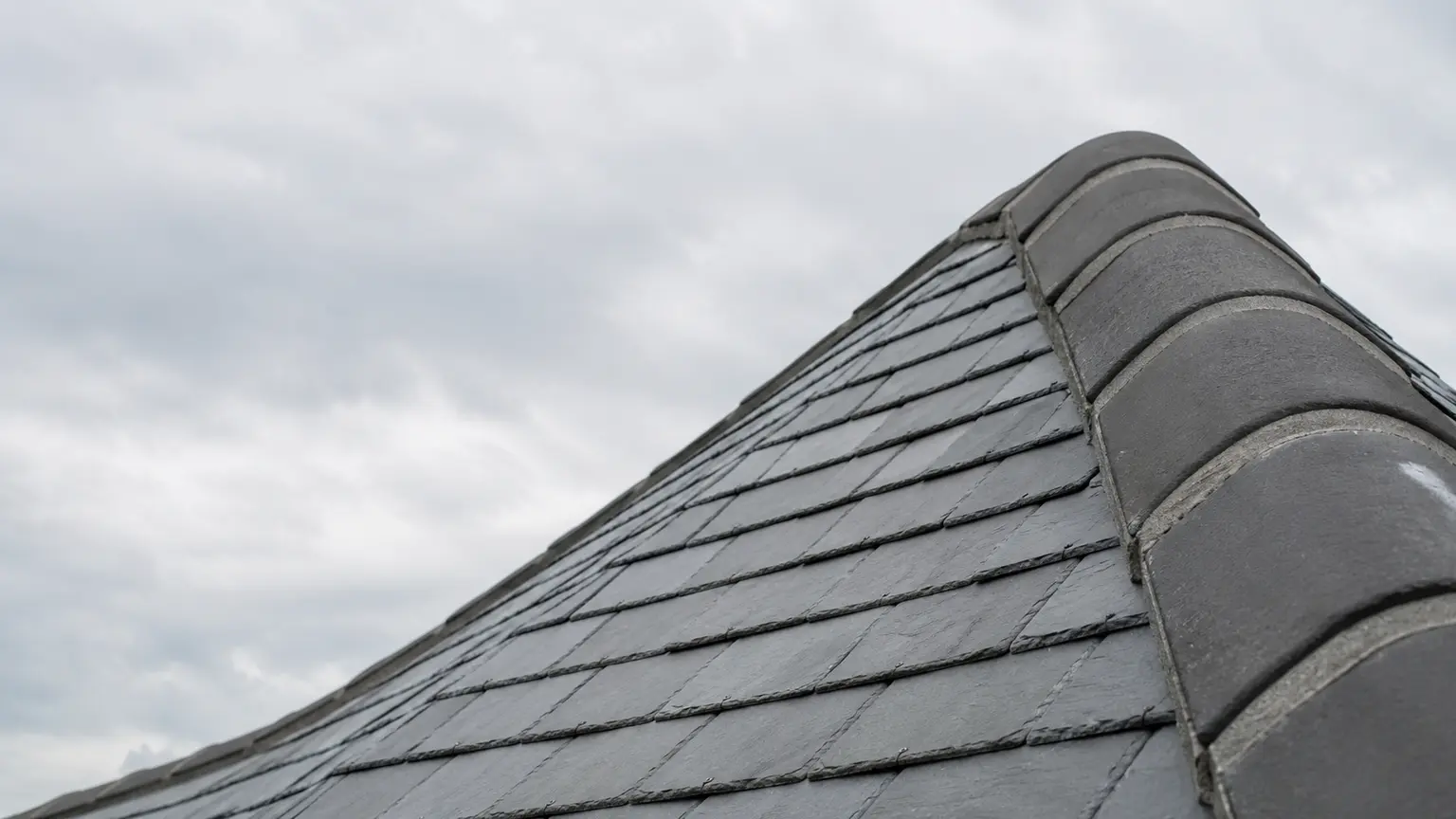
Old bitumen felt beside a modern breathable roofing membrane on a Dublin roof
Mid-Century Roofing · Dublin

Roofing Felt vs Breathable Membrane, the Layer You Never See

The bitumen felt under an older Dublin roof is usually the first thing to fail. What a modern breathable membrane does instead, and why it changes the attic.

Last updated: August 2026

The roofing felt vs breathable membrane comparison matters more than almost anything else on an older Dublin roof, and it is the part nobody ever sees. On most mid-century houses the original bitumen felt has already failed, which means the tiles above it are working alone whether the owner knows it or not.

What the Old Felt Was Doing Up There

A tiled roof is not watertight in the way people assume. Tiles shed the great majority of water, and in wind-driven rain a certain amount gets past them. The layer underneath is what catches that and carries it back out to the gutter, which is why it exists at all.

On a roof from the 1930s to the 1970s, that layer is bitumen felt, a sanded, tar-impregnated sheet laid over the rafters before the battens went on. It did the job well when it was new. What it was not designed for was seventy years of Irish weather.
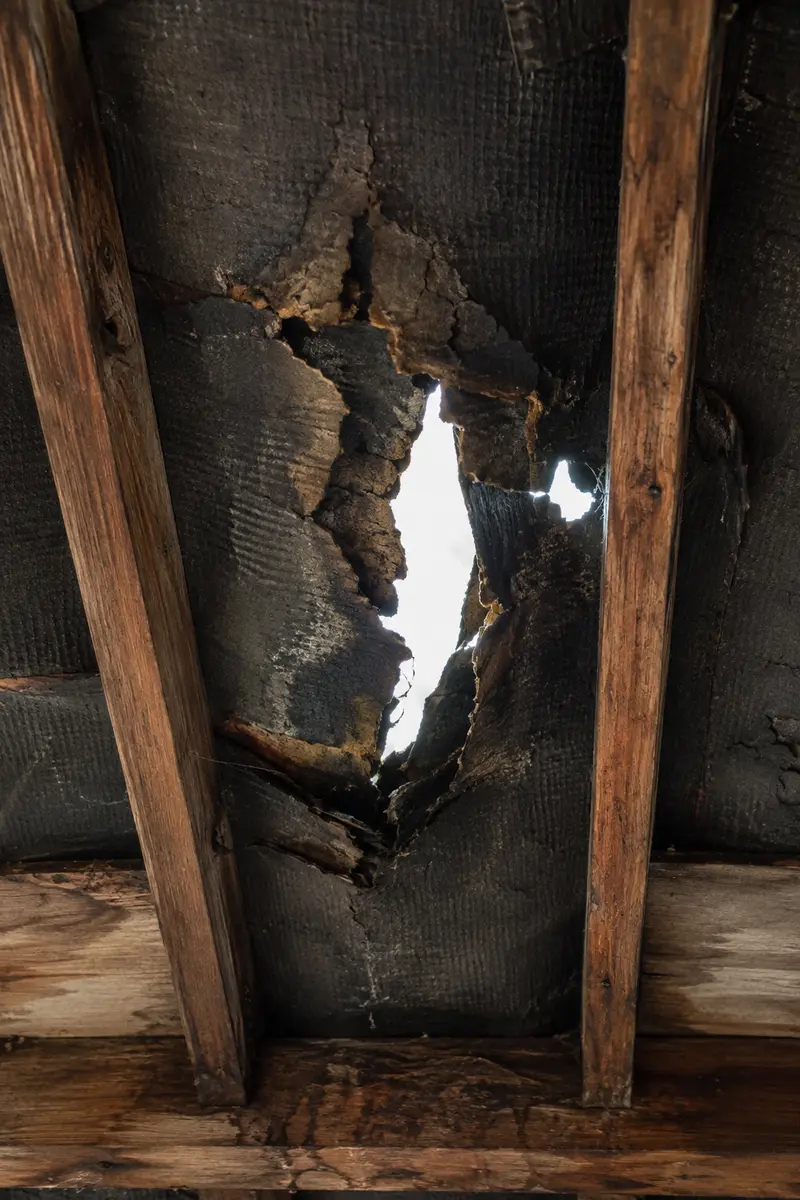
Brittle torn bitumen felt in a Dublin roof space
Bitumen felt at the end of its life. Brittle, black and torn along the rafters.

Bitumen goes brittle with age and with heat cycling. It stops being a flexible sheet and becomes something closer to dry paper, and it tears along the rafter lines under its own weight. You can usually see it for yourself, from inside the attic on a bright day, hanging in strips or gone entirely between the timbers.

What a Breathable Membrane Does Differently

A modern breathable membrane is a light, tough synthetic sheet that does the same water-shedding job far better, and adds one property the old felt never had. It lets water vapour pass outward while keeping liquid water out.
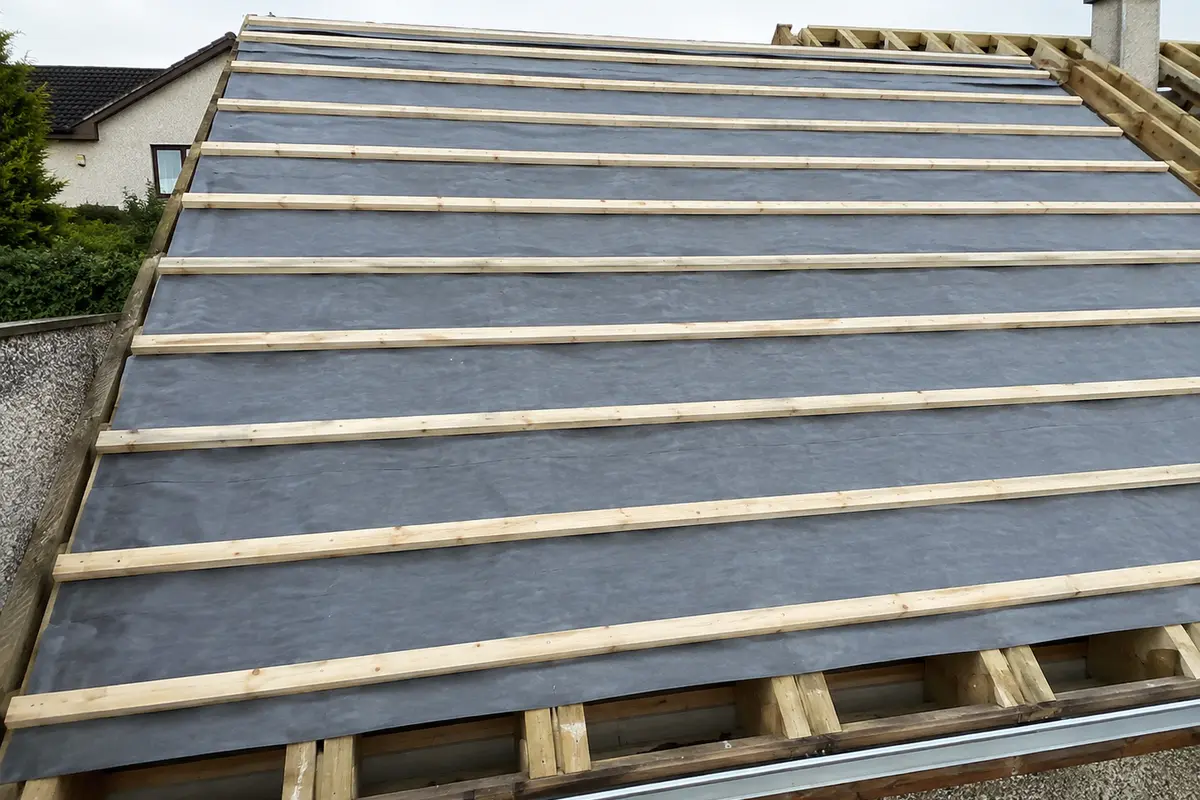
New breathable membrane and treated battens on a Dublin re-roof
New membrane and treated battens. This is the part of a re-roof that decides how long the next few decades go.

That one-way behaviour is the whole point. Moisture is always being produced inside a house, from cooking, washing, drying clothes and simply breathing, and some of it finds its way up into the roof space. Old bitumen felt trapped it there. A breathable membrane lets it out.

It is also far tougher physically. It does not go brittle the way bitumen does, it resists tearing, and it holds up to being walked on during the build in a way old felt did not.

Why This Matters in a Mid-Century Attic

Here is where it becomes a practical problem rather than a technical one. Houses of this era were built with no real thought given to roof ventilation, because with a draughty attic and modest insulation it was not needed. Over the years most of them have had thick insulation laid across the attic floor, which is a good thing for heating bills.

What that does, though, is make the roof space colder while the moist air from the house is still finding its way up. That moisture condenses on cold timbers and on the underside of the felt, and it shows up as damp patches, dark staining on rafters and sometimes water dripping onto the insulation. It looks exactly like a leaking roof.
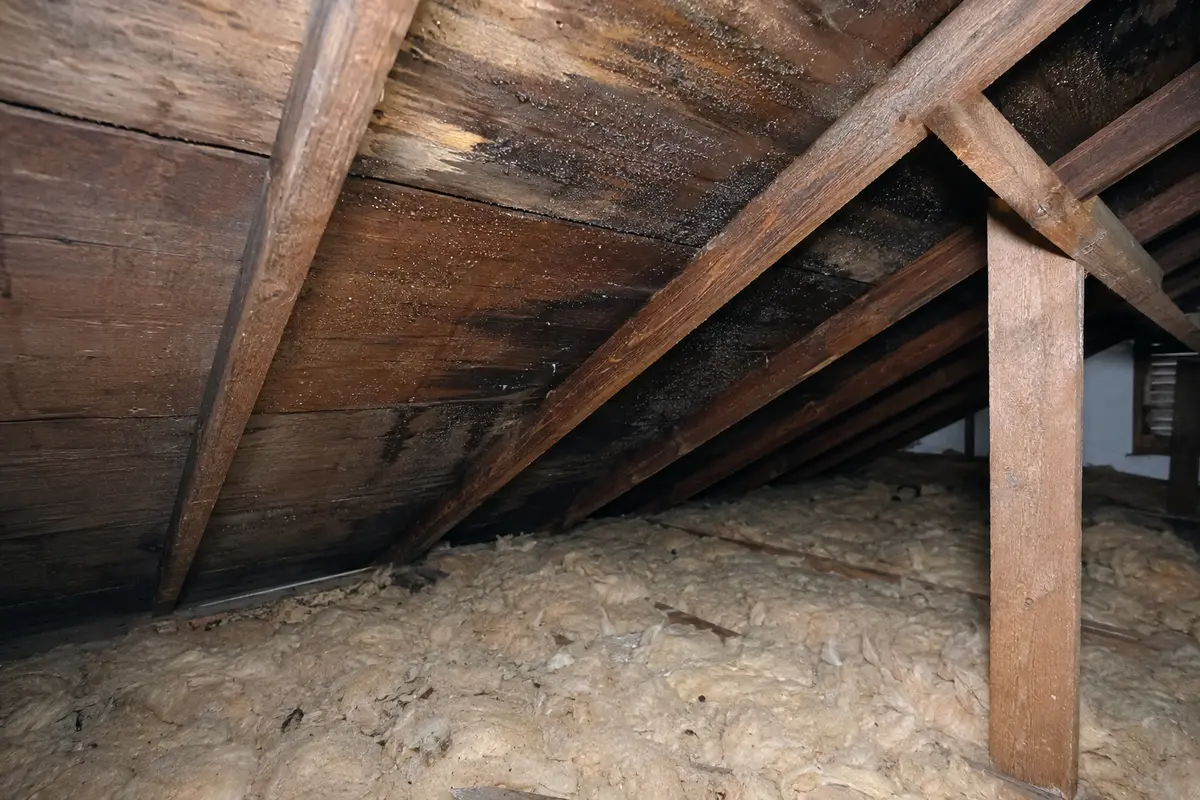
Damp staining on attic rafters in a Dublin house from trapped condensation
Condensation damage, not a leak. Warm moist air meeting cold timbers in an unventilated roof space.

Diagnosing that correctly matters, because re-roofing to solve a condensation problem is an expensive way to fix the wrong thing. Equally, a re-roof that puts in a breathable membrane and ventilates the ridge does genuinely solve it, which is a real benefit of the work beyond just keeping rain out.

Can the Felt Be Replaced on Its Own

Not really, and it is worth understanding why. The felt sits under the battens, which sit under the tiles. Getting at it means taking the tiles and battens off, which is most of the work of a re-roof already.

That is why the felt and the tiles tend to get dealt with together, and why we look at both when assessing a roof. It is also why a roof whose tiles are near the end is the right moment to act, because you get the membrane, new battens and a ventilated ridge as part of a job you were going to do anyway.

There is a partial option worth knowing about. Where the felt has failed only at the eaves, which is common, felt support trays can sometimes be fitted from outside with limited disruption. It is a repair rather than a solution, and we will tell you honestly whether it buys enough time to be worth it.
Membrane and Felt Questions, Answered

How do I check the felt in my own attic?
Go up on a bright day and turn the light off. If you can see daylight through the roof, or strips of black material hanging down between the rafters, the felt has torn. Look particularly along the rafter lines and down at the eaves, which is where it usually goes first. You are not looking for perfection, you are looking for whether it is still a continuous sheet.
Is a breathable membrane worth the extra cost?
The cost difference over a basic underlay is modest in the context of a full re-roof, and it is the part of the job that most affects the roof space for the next few decades. Given the roof is open once and will not be again for a very long time, it is not somewhere we would suggest economising.
Could my damp attic be condensation rather than a leak?
Quite possibly, and it is worth establishing before spending anything. Condensation tends to show as widespread damp on the underside of timbers and on nails, often worse in winter, rather than a defined stain in one place that gets worse in rain. A leak usually traces to a specific point. We check for both.
Does a breathable membrane replace the need for attic vents?
It does a great deal of the work, particularly combined with a ventilated dry ridge, and on most standard re-roofs that combination is sufficient. Where a roof space has been converted or heavily insulated, additional ventilation is sometimes still needed, and that gets assessed on the individual house rather than assumed.
Honest prices, up front

We Publish Our Roofing Prices

Most roofers make you chase a number. We put honest guide prices for roof repairs, flat roofs and full re-roofs right on the site, so you can budget before you ever pick up the phone. Every job still gets a free inspection and a written quote, with no pressure to go ahead.

See our Dublin roofing costsReal 2026 guide prices for every job on the roofView the price guide →
Reviews

What Dublin Homeowners and Businesses Say

We have never asked anyone for a review, and we have never taken one down. Our perfect 5.0 rating from 41 Google reviews is simply what people wrote once the job was finished, tidied and paid for.

5.0
★★★★★
Rated on Google · 41 reviews
Read all reviews
★★★★★

“I had a leak during the recent rain, and they were the only company who actually answered the phone and came out the same day. Quick, honest, and did exactly what they said they would”

C
Caoimhe Dunne
Verified Google review
★★★★★

“They completed a full roof inspection and gave honest advice with no pressure. Very refreshing to deal with such a genuine company”

R
Ronald Zaid
Verified Google review
★★★★★

“They gave me a clear quote, no hidden extras, and the work was done exactly as promised. Roof looks brand new. This company knows what they’re doing.”

C
Cruz Sutton
Verified Google review

Get Your Free Dublin Roofing Quote

A free quote, a friendly local team, and a straight answer on what your roof needs.

  • Free inspection and a written quote
  • 20-year guarantee on our work
  • Family-run since 1989, fully insured

Rated 5.0 on Google from 41 reviews

Get your free quote

Send your details and we will come out for a free inspection.

Thanks, we have your details

We will be in touch shortly.